Ash, Paper, Memory, and the Quiet Act of Letting Go

written for “A Drop in the Ocean”, Substack by Cate MQuaid; January 20, 2026: “Silence in Form”
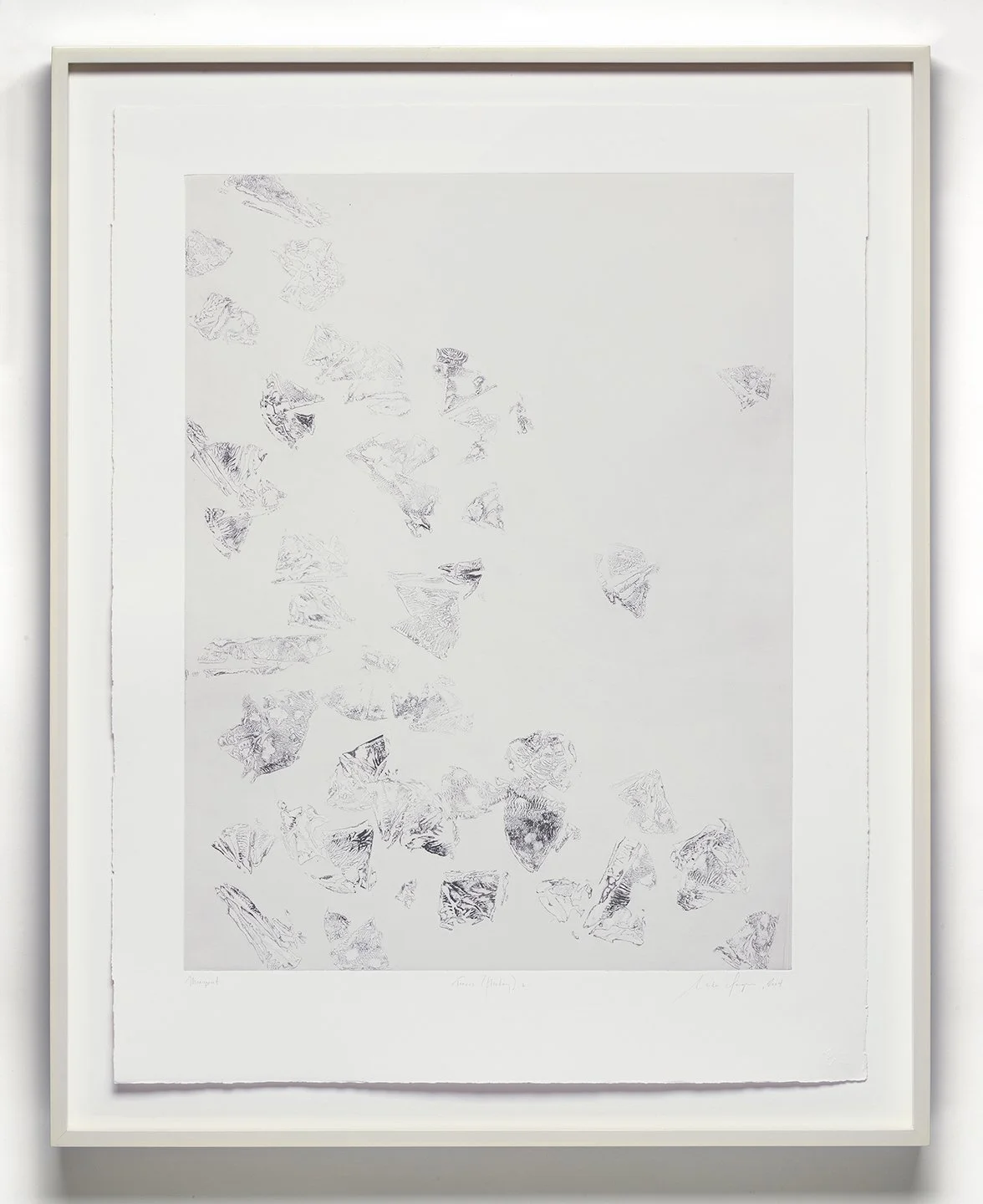
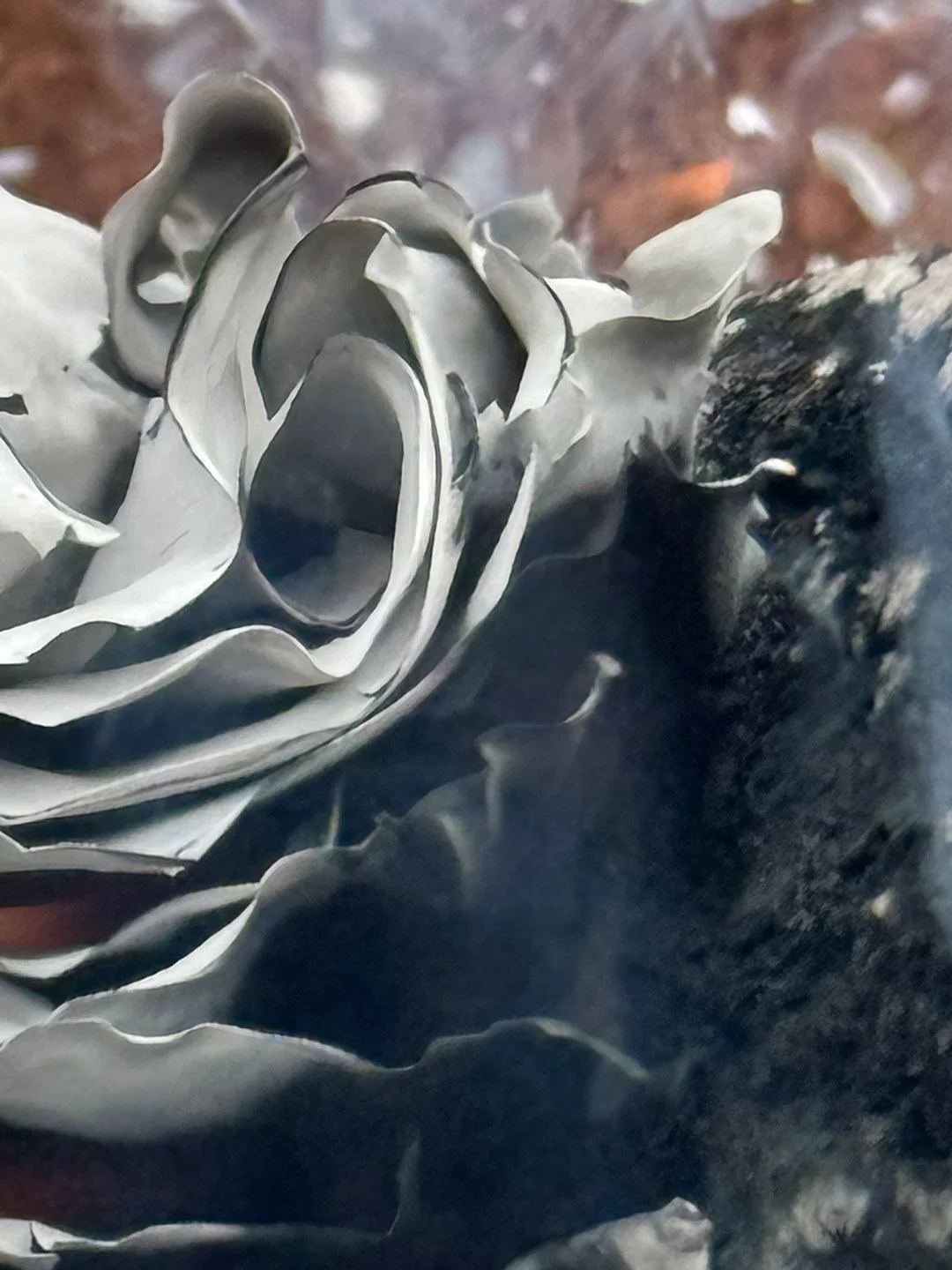
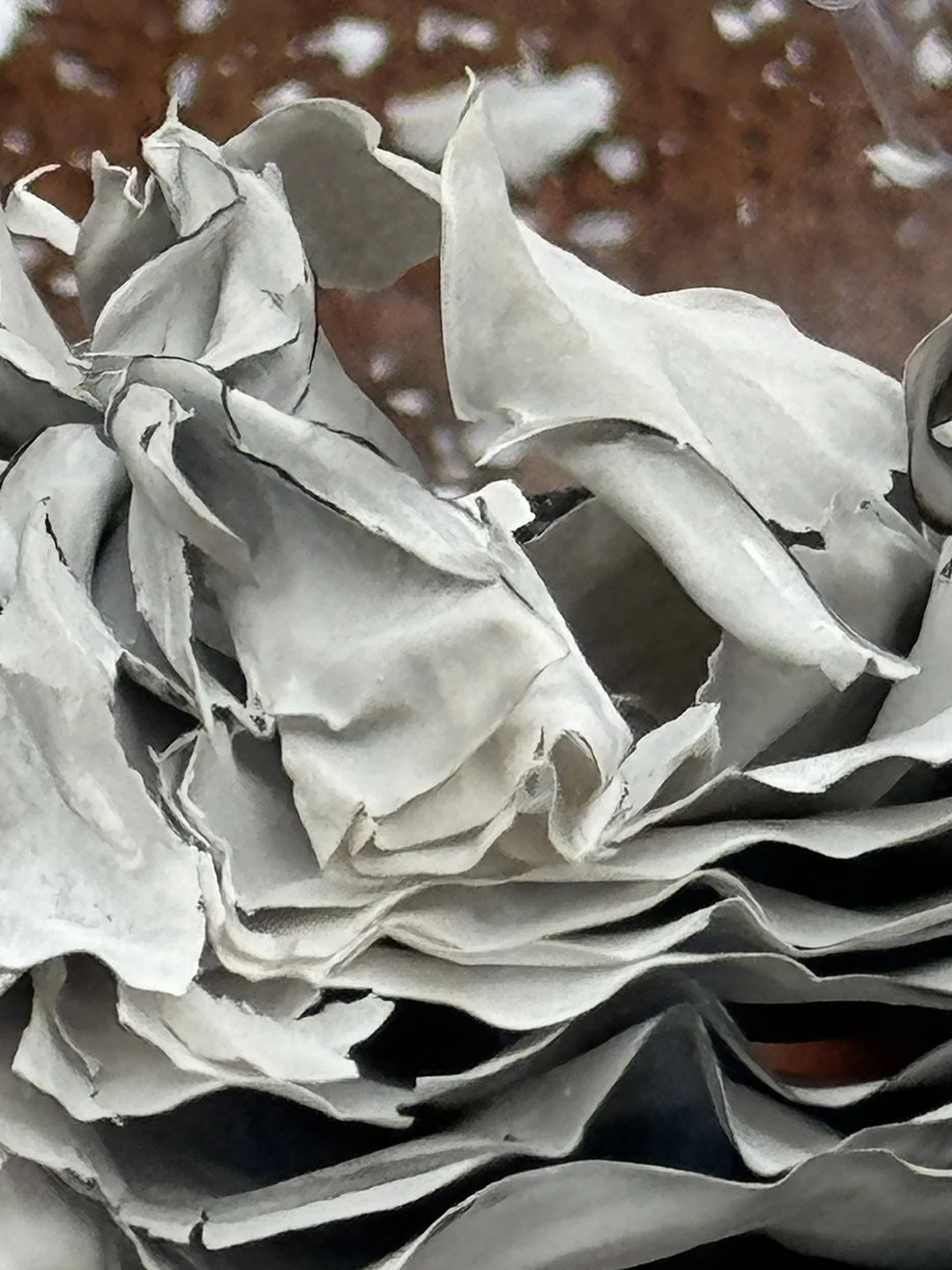
© Linda Pagani, Traces (fleeting), n.2, 2024, monoprint, ash, ink, graphite on paper 	                             photo credit Will Howcroft

© Linda Pagani, Traces (fleeting), n.2, 2024, monoprint, ash, ink, graphite on paper    photo credit Will Howcroft

For the past decade, I have kept personal journals filled with intimate thoughts. They are written in careful cursive, a discipline ingrained early on by parochial school. Page after page, every day—just as author Julia Cameron insists in The Artist’s Way. These journals are not meant to be read by anyone else. They are my private container, a place to give voice to emotions I cannot easily express out loud, especially the negative ones: anger, resentment, grief, sorrow.

Recently, I began to feel my own mortality. A thought weighed on me: if I were to die tomorrow, my journals would remain. My most unfiltered thoughts would lie bare for the world to interpret. I worried they might be mistaken for hatred or bitterness, when in truth they were a purging—a somatic exercise, a way to move toxic feelings out of my body and onto paper.

I did not want to erase those years, but I also did not want them preserved in that form. So I burned them. All of them.

The act was both unsettling and liberating. What was once permanent became ephemeral. Memory turned to dust—surrendered, but not quite forgotten.

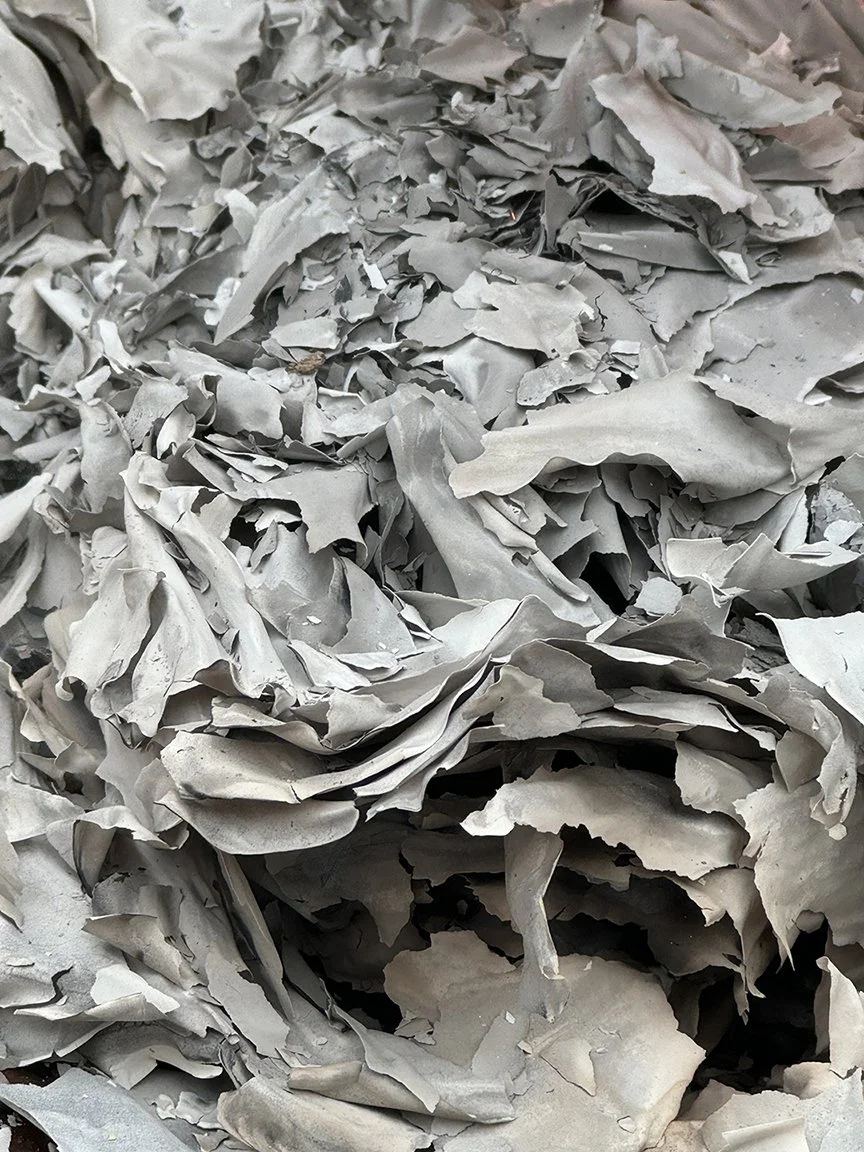
From those ashes, new work was born — Traces (fleeting), a series of monoprints created from the debris of my own burnt journals.

Ash as Evidence
burning my journals 

The ashes became material evidence of emotions once inscribed in ink. They held white-hot rage accumulated from years of keeping silent when I should have been vocal. They also carried a generational legacy—the learned containment of negative emotion, the habit of endurance over expression.

Yet this work is not about despair. It is deeply hopeful.

There is a fluttering upward in the composition of the prints, a quiet lift toward the skies. The ash-embedded forms seem to float—lightened, released—representing peace, calm, and love.

Fleeting, yet deeply felt, the ashes linger as a testimony to what once was.


Finding a New Language

My practice has long been rooted in an awareness of space as an emotional agent, with early work focused on architecture and landscape through the lens of a camera. Over time, I began reimagining architectural structures in new media, starting with paper. Origami-like shapes emerged, guided by the visual language of walls, edges, and corners. I made hundreds, then thousands. Assembled together, these interpretations of space gradually shifted from geometric to organic, and continue to resonate throughout my work in sculpture, print, and installation.
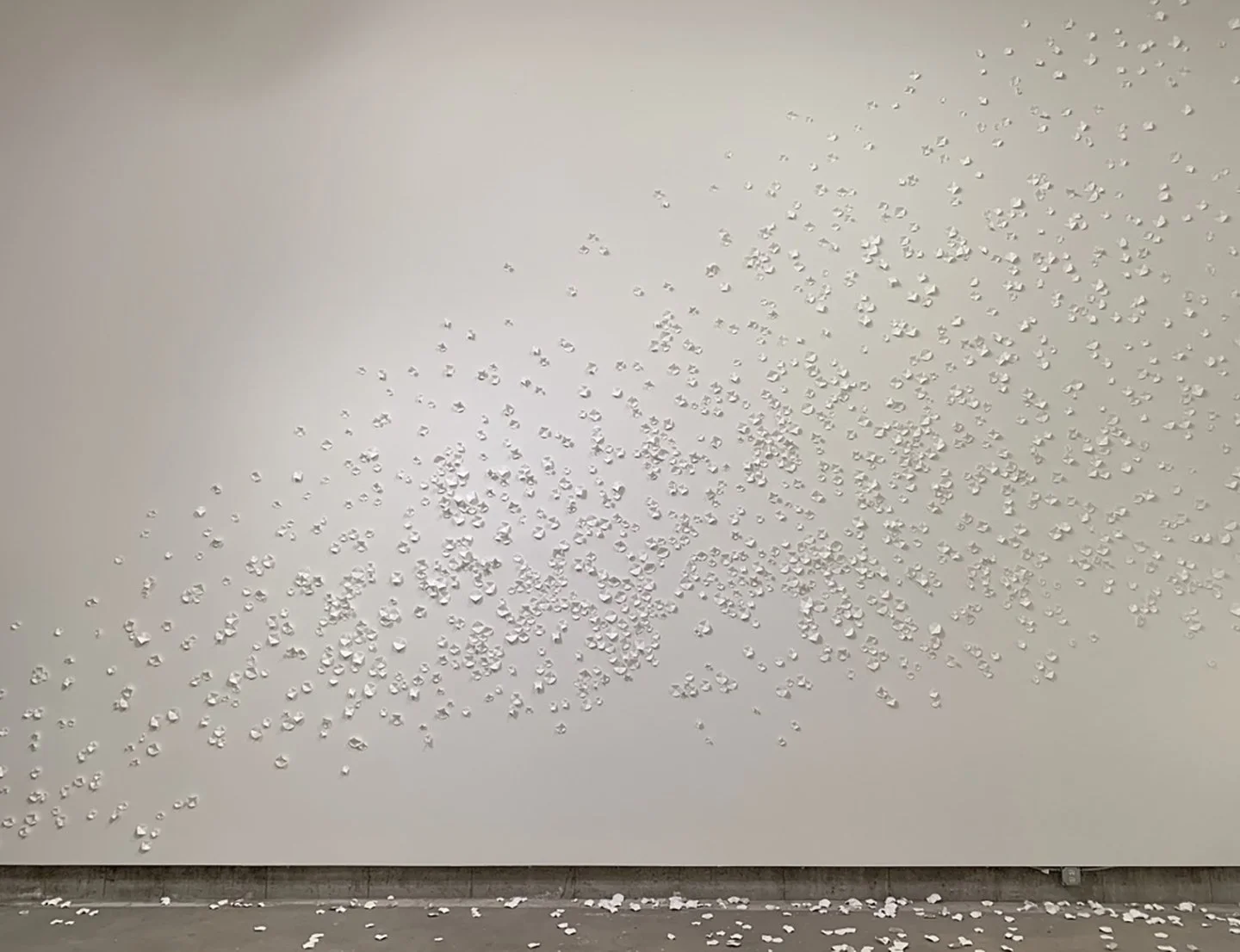
© Linda Pagani, Garden of Eve, 2020, paper, site specific installation

The explorations in paper naturally led to Traces (fleeting). I began to ask: could decomposition itself leave a trace of feeling, preserving the intensity of anger, grief, and release in material form? In the prints, the ashes assume a presence—transforming what was once private and contained into something visible, tender, and enduring.

With the guidance of master printer Bryan Smith, founder of Stone Hill Press, I began working more seriously with printmaking. I was hesitant at first. I have never identified as a drawer, and printmaking always seemed reserved for artists with finely honed draftsmanship. 

Process as Transformation 

Bryan nudged me into unfamiliar territory, encouraging me to loosen my grip on control and to ‘draw’ through my own mark making. We etched the shapes into the copper plate by ‘swooshing’ my folded paper forms onto wet ground. After the ground dried, the plate was bathed in acid and we were ready. The first ink test print felt wrong. Heavy. It didn’t reflect the experience of watching the journals burn, of seeing the anger lift and float away.
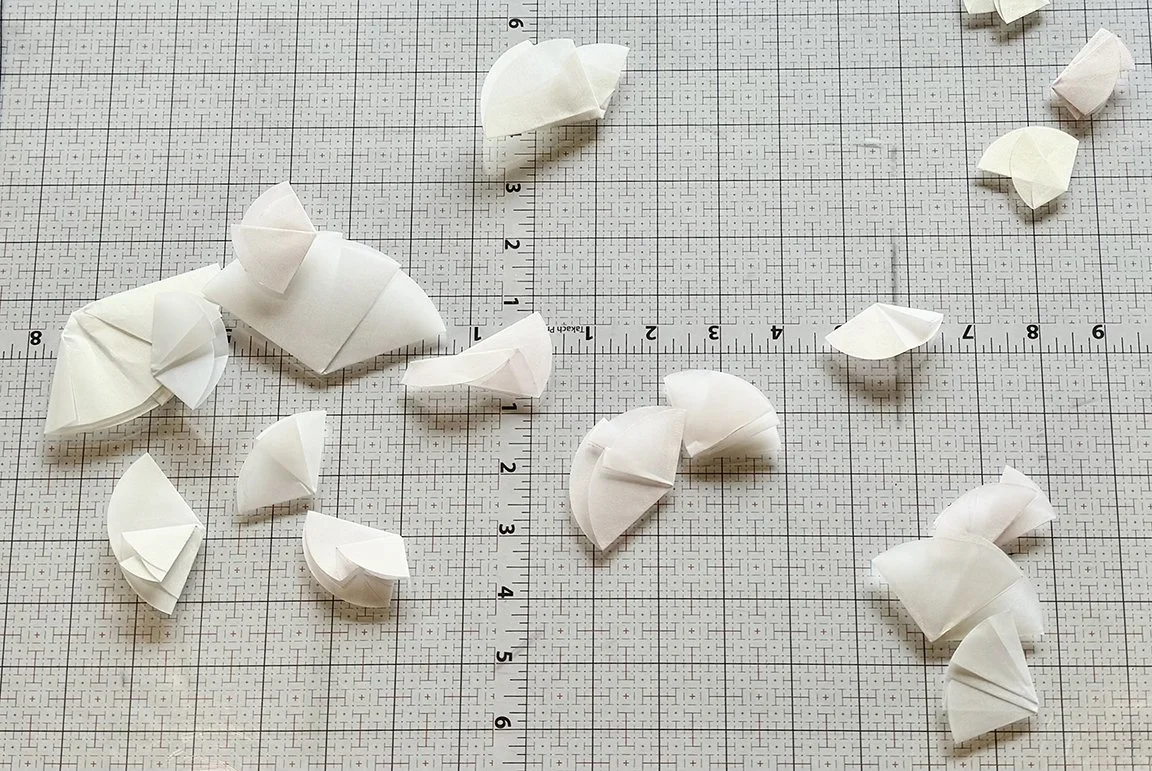
folded paper shapes
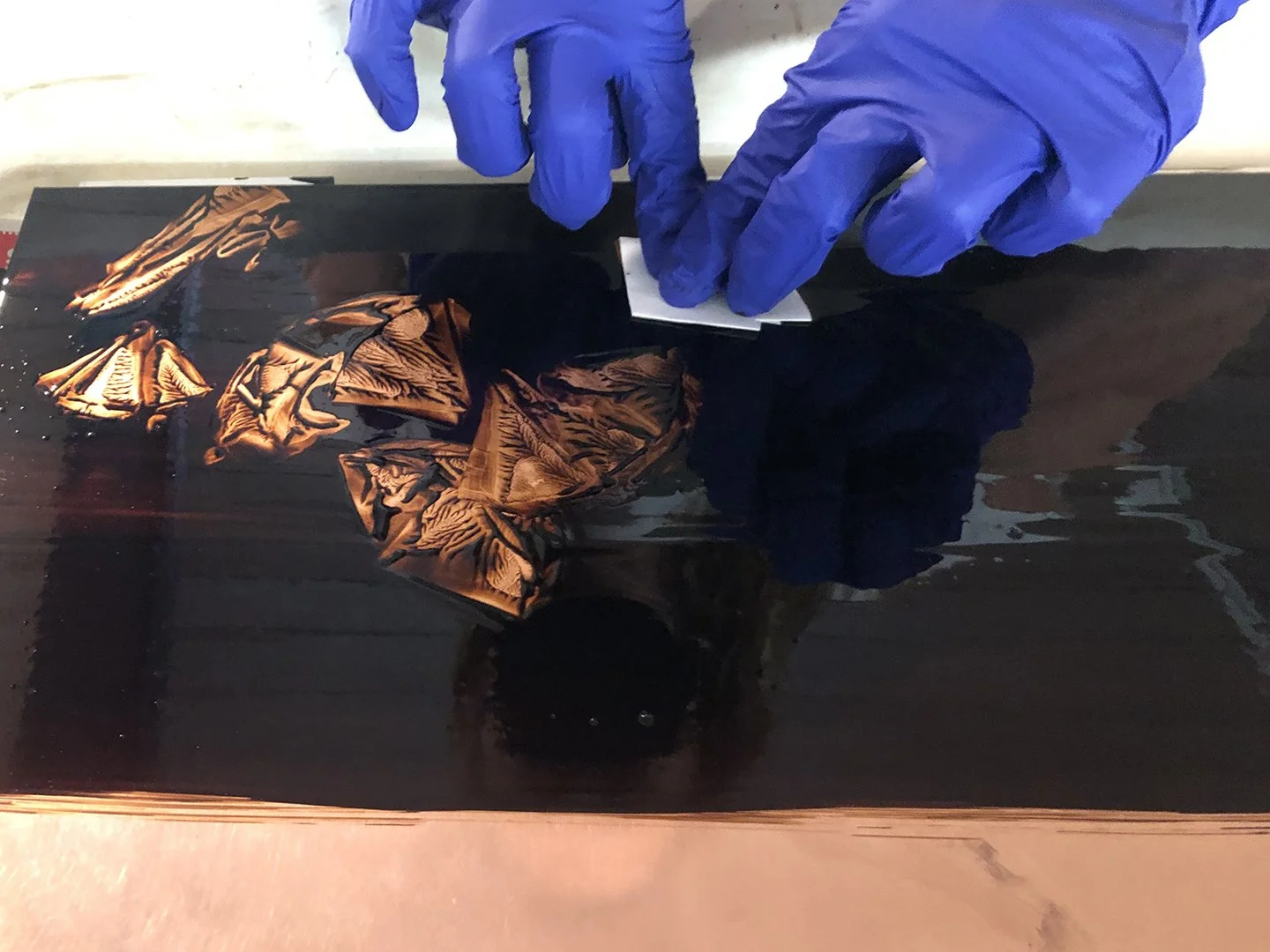
creating the forms on wet ground
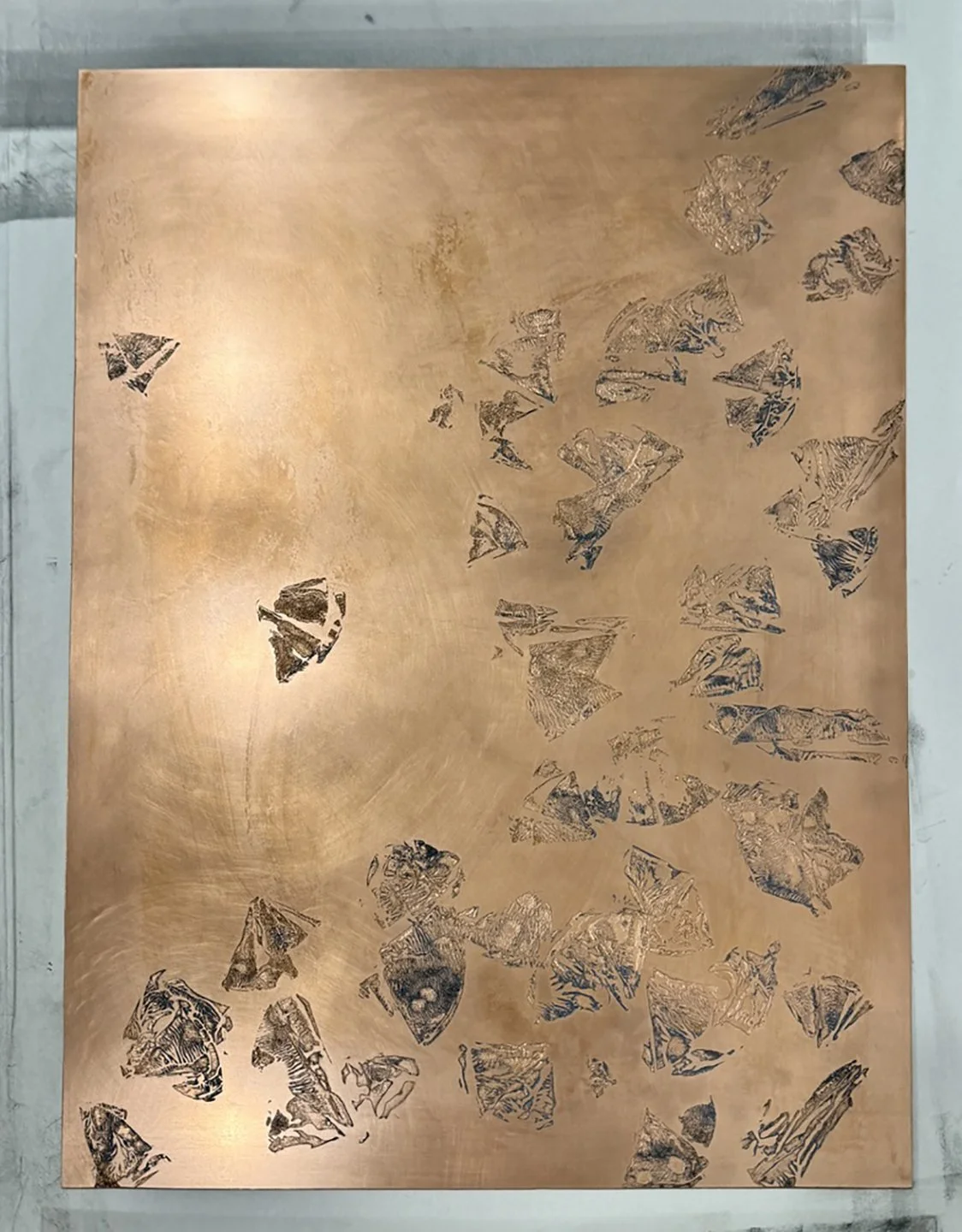
final etched copper plate
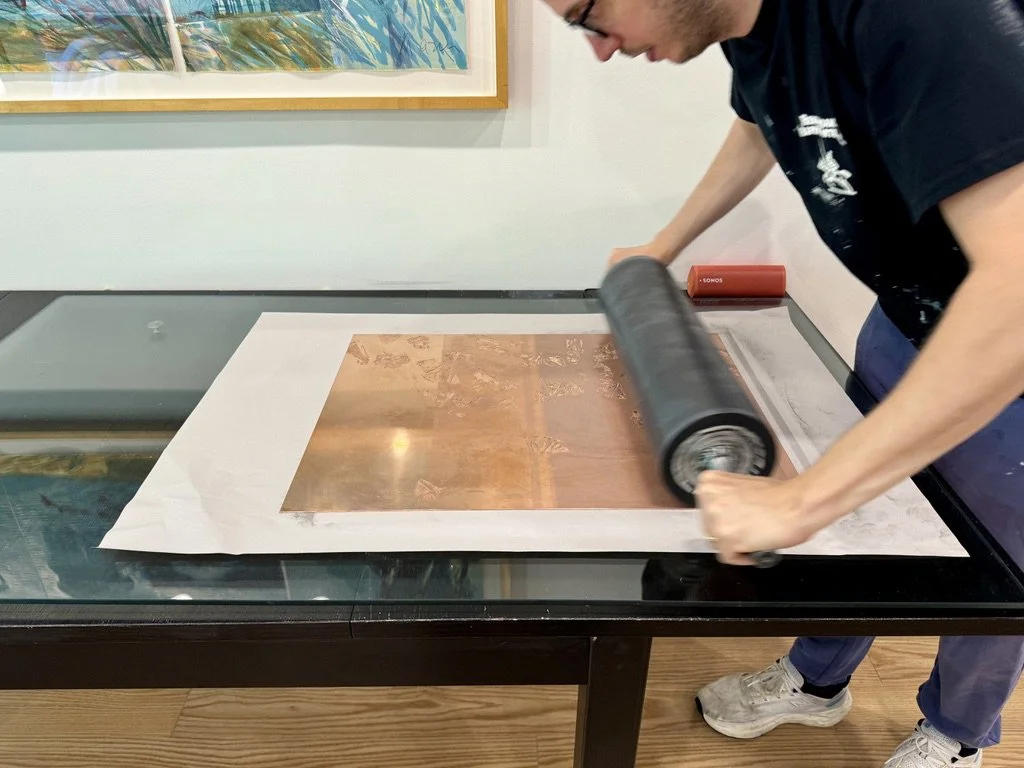
Bryan Smith rolling ink onto the etched copper plate

Then we tried no ink—just embossment.

Yes—and no.

The embossments were seductive, but the image only revealed itself when viewed at certain  angles, echoing a frustration I had carried for years from earlier work. So we kept experimenting. Ink. Ash. Mica. Graphite. Chine Collé.

And suddenly, it resolved. Printmaking unfolded as a process of becoming: numerous iterations, trial and error, one more, one more, until…
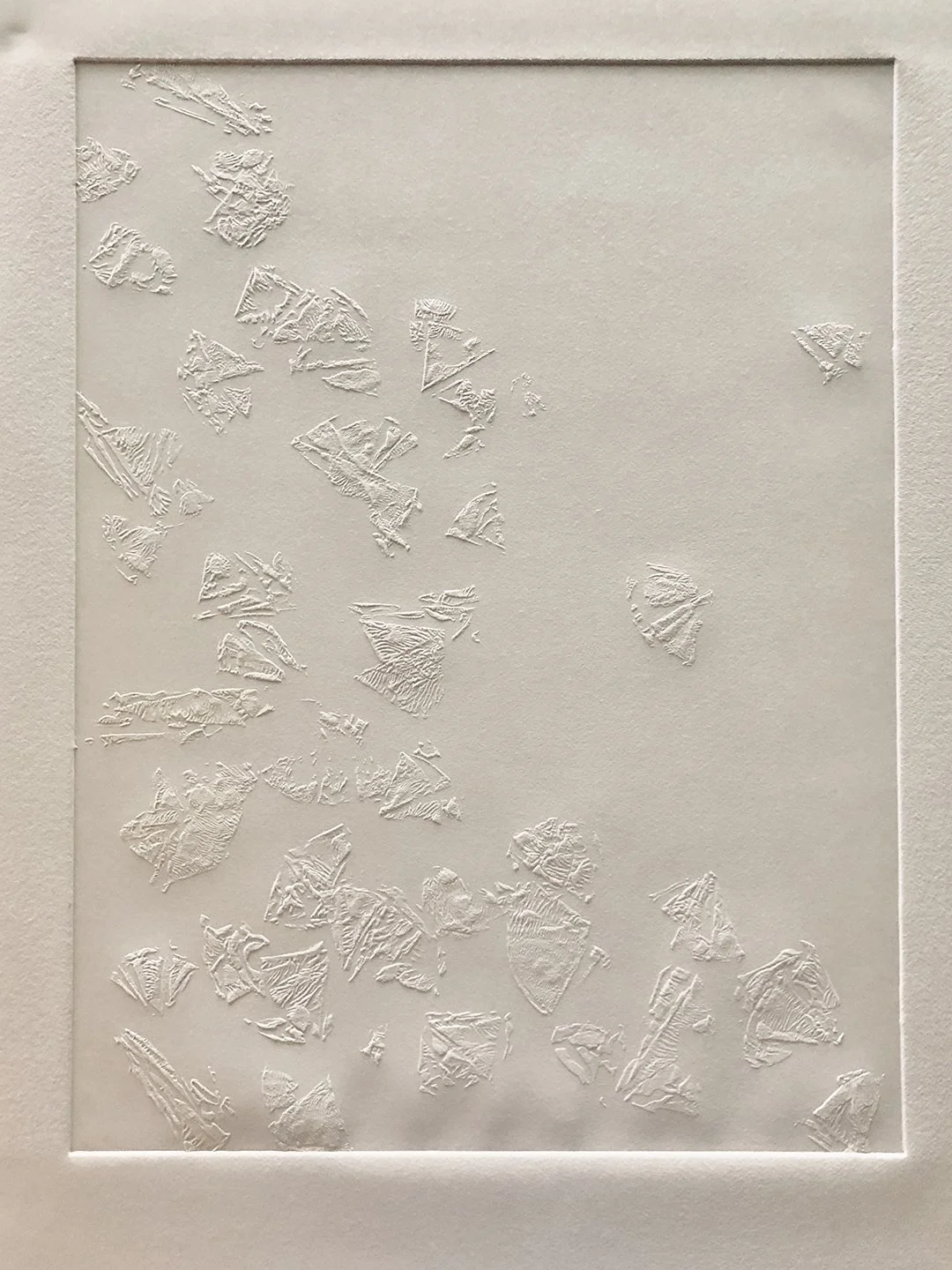
© Linda Pagani, Traces (fleeting), n.1, 2024, monoprint, embossment on paper

The forms—coaxed into visibility by a delicate balance of color and pressure-—floated upward across the paper. I could finally see it—the transformation of negative emotion into lightness of being.
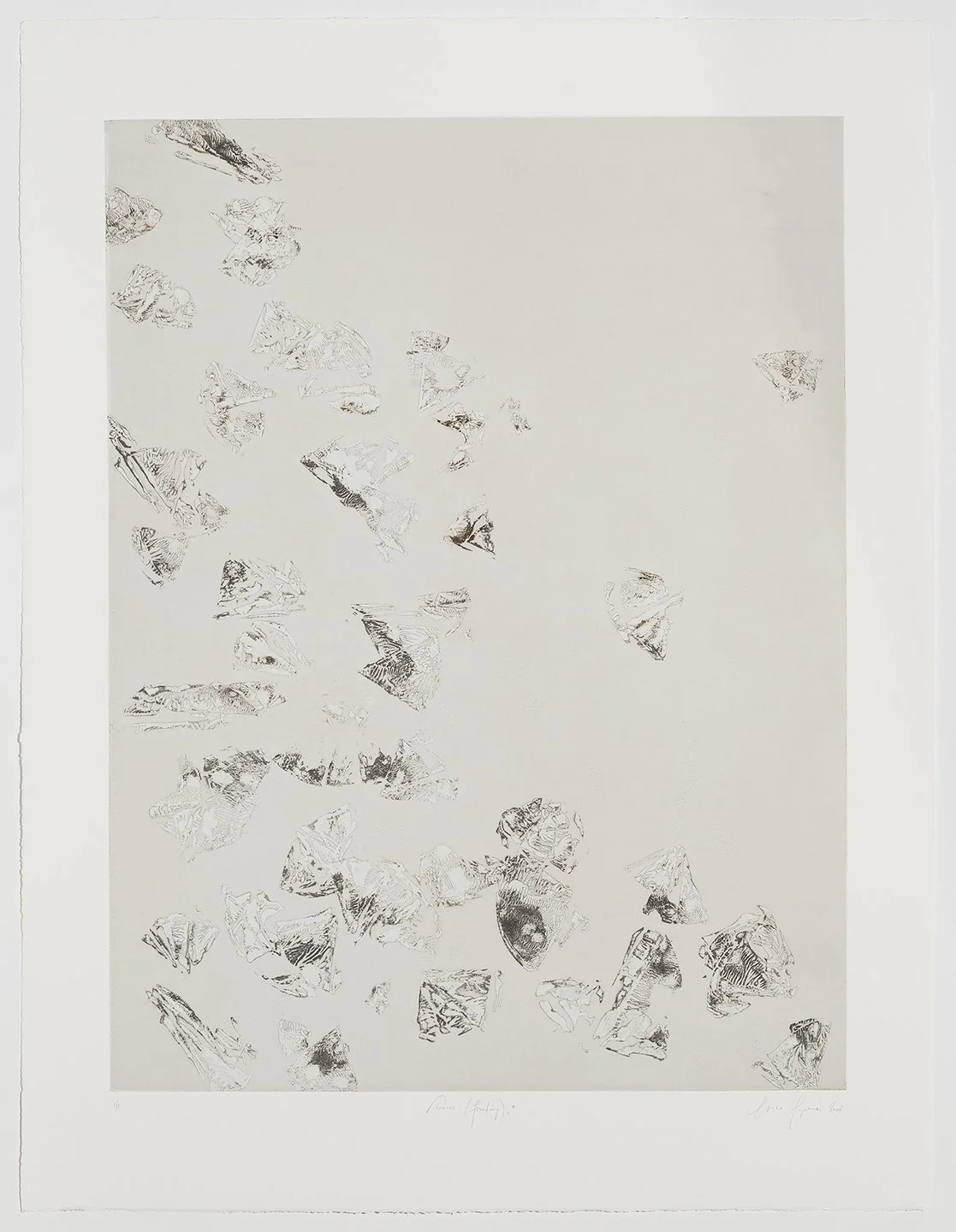
© Linda Pagani, Traces (fleeting), n.3, 2024, monoprint, ash, ink, graphite on paper         photo credit Will Howcroft

Having a Voice

At its core, this work is about having a voice in my own life.

The journals did their job. They carried me through unbearable moments. Burning them was not an erasure, but a transition—from containment to release, from memory to material, from silence to form.

What remains are traces.

Fleeting, tender, and true.
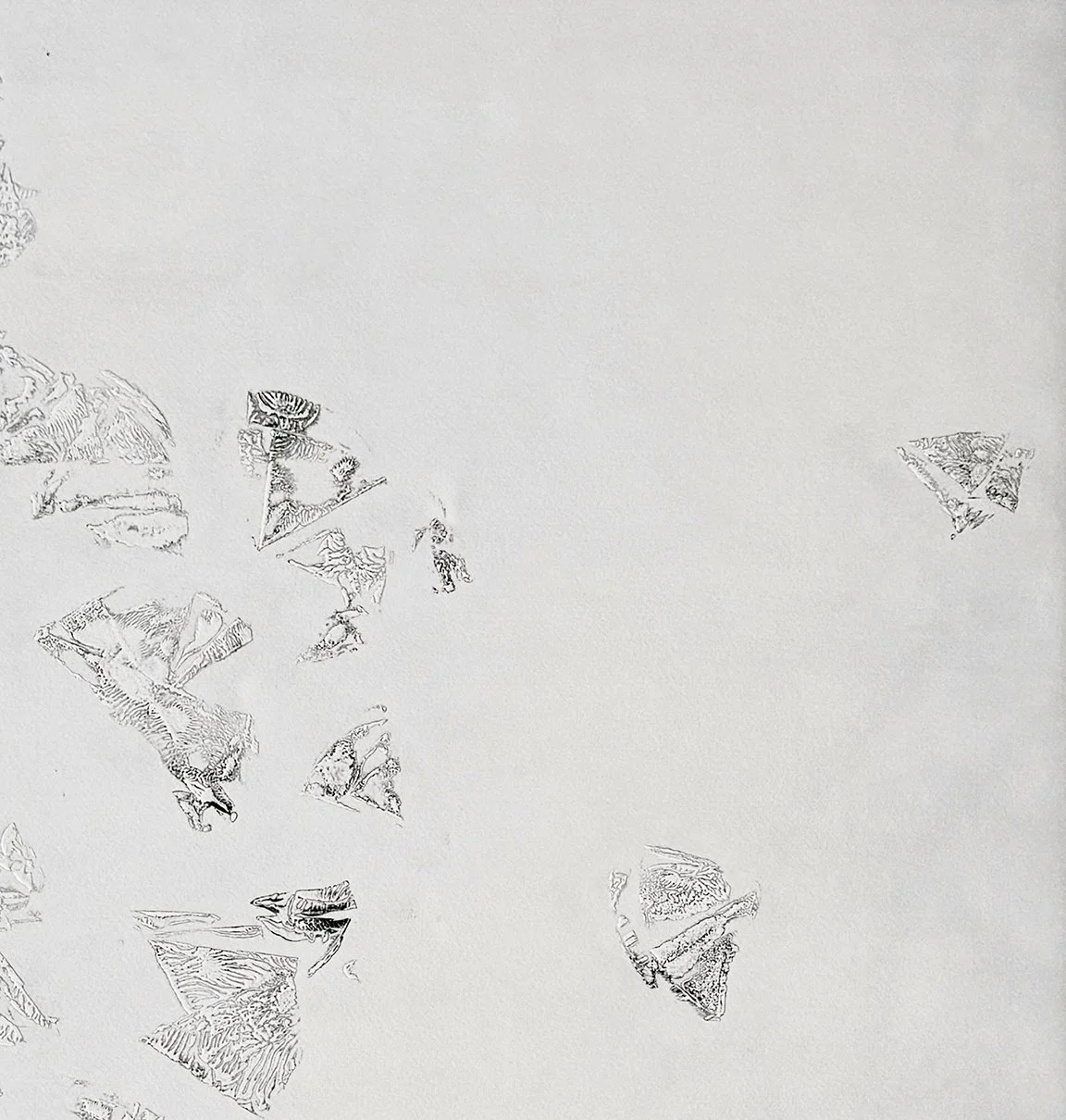
close up © Linda Pagani, Traces (fleeting), n.2, 2024

TENDER IS THE DAY

TENDER IS THE DAY is a new body of work I began during a 2 week residency in August 2025 in the Adirondacks.

THE ENVIRONMENT: 300 acres of conservation land, working farm, small cabins; outdoor kitchen; a barn for studio space that was challenging, with more ceiling than walls; I adapted by working mostly in mobile-like sculpture.

My project centered around my attempt to be present, calling on the natural world for support, honoring the preciousness of the here and now.  In the past few years the daytime has felt like a battle while the nighttime has brought peace.

I wanted to know what it could feel like to practice tenderness in the day, with full awareness and presence, tending solely to my self, rather than home and family. I created quiet rituals for myself: sun salutations, journaling, reading and walks in nature. I brought two books: Buddhist Pema Chodron’s When things fall Apart and Artist Anne Truit’s Daybook. Both informed how I approached my days.

Read More

moments of motherhood

hurry, scurry, worry, blurry

tug, bug, hug

tired, wired, mired

deep, sleep, weep, beep beep

toy, joy, coy, boy

giggle, wiggle

walk, talk

whirl, girl, curl

cap, tap, nap

boots, hoots, toots

tuck, muck, duck duck

goose, juice

care, fair, wear, tear

guide, bide, hide

hold, bold, told

fierce, pierce

funny, bunny, honey

strong, wrong

sing song

best, nest, rest

dote, coat, big tote

proud, loud, wow’ed

yes, mess

smile, a while

run, sun, fun

great, late, wait

brave, wave, gave

calm, balm, psalm

fly, sigh, cry

kite, might, sight

close, dose, toes

bath, wrath

first, burst, cursed

high, tie, bye bye

zip, sip

might, right

teach, beach

kind, bind, find, mind

safe, chafe

pure, cure, sure

true, do, goo, loo, moo, zoo

up, cup, sup, pup

stop, slop, mop

lift, sift, rift

warm, form

sand, hand

bang, dang, sang

touch, so much

love, dove

scare, fear

you, boo

me too

ROAMING RESIDENCY

ADIRONDACKS, NY

ADIRONDACKS, NY

roam /rōm/

(verb) move about or travel aimlessly or unsystematically, especially over a wide area.

In early July I packed my camera and basic art supplies into my car, leaving my Boston home and studio for the beginning of a self-appointed artist’s roaming residency. Seeking the unfamiliar, I organized a nomadic studio experience for myself.

Southern Maine

Southern Maine

STOWE, VERMONT

STOWE, VERMONT

Mindful of traveling amidst a global pandemic, I chose to stay close to home. I initially began my journey as guest in friends’ summer homes (thank you friends!) in and around New England. I was so surprised how distance did not need to be great to have a new experience. 

MARION, MA

MARION, MA

I am now settled into a 3-month stay in the Berkshires, in western Massachusetts, just 2 hours from my home, though millions of miles from routine. I make time for reflection, discovery, growth and have the mental space to create and explore. Roaming is helping me uncover who I really am.

BERKSHIRES, MA

BERKSHIRES, MA

regeneration

It took 2 months for this little camomile plant to sprout…

It took 2 months for this little camomile plant to sprout…

…meanwhile, the little potted plant’s ‘sisters’ were flourishing in their environment.

…meanwhile, the little potted plant’s ‘sisters’ were flourishing in their environment.

The experiment brought to mind how environment plays a large role in our ability to thrive, and how we can regenerate forgotten spaces with attention and intention.

This spring I collaborated once again with my dear friend and colleague, Italian artist Federica Pamio, on a body of work titled ruins reborn, our response to a student project studying urban areas of Rome that have been forgotten, abandoned, or neglected.

student photo of neglected building in Rome waiting to be reborn

student photo of neglected building in Rome waiting to be reborn

Utilizing student photos of abandoned buildings, we created corresponding architectural drawings, identifying the bones of the building.

our architectural drawing, Lin.Fe, 2020

our architectural drawing, Lin.Fe, 2020

Once the noise of the environment was removed, we superimposed our imagery, resulting in a collage of nature, human form and the artificial structure. Possibility unfolded, ruins were reborn!

ruins reborn 1, Lin.Fe, 2020

ruins reborn 1, Lin.Fe, 2020

IMG_0297.jpeg

…and that little planted pot of chamomile was eventually transferred to the flourishing garden and helps me thrive daily!

MY STUDIO IS MY SANCTUARY

Within you there is a stillness and sanctuary to which you can retreat at anytime and be yourself
— Herman Hesse

I am most myself in my studio. It’s on the 2nd floor of our home, nestled in the treetops. It’s filled with light and I can feel time standing still in here. I write, I cut, I fold and crumple, edit, test, experiment, ruminate and meditate. I enter this space both physically and spiritually.

prepped for a studio visit

prepped for a studio visit

My photo work between 2010-13 was a study of stillness through the play of light with the architectural elements throughout my home. I look at these images now and I can clearly see them as frozen stills of my moving life that seemed so static at the time of raising young children while a student in art school.

composition for a reflection, 2012

composition for a reflection, 2012

As we continue to shelter-in-place, I wonder how we can all create some space for a sanctuary that is beyond the physical. I am still adjusting to this new norm and am thinking a lot about mental health. I just registered for Yale’s online course, The Science of Well-Being, their most popular class in their 300-year history, with over 600,000 people who registered for it in March 2020 alone. Join me? Runs for the next 10 weeks, self-paced, 20 hours total, and it’s free! Starts this week.

MY MEDITATION TOOLS

I use this Zafu meditation cushion and thick yoga mat in my studio when I need to reflect.

I use this Zafu meditation cushion and thick yoga mat in my studio when I need to reflect.

DIY prune job + the artist’s toolbox

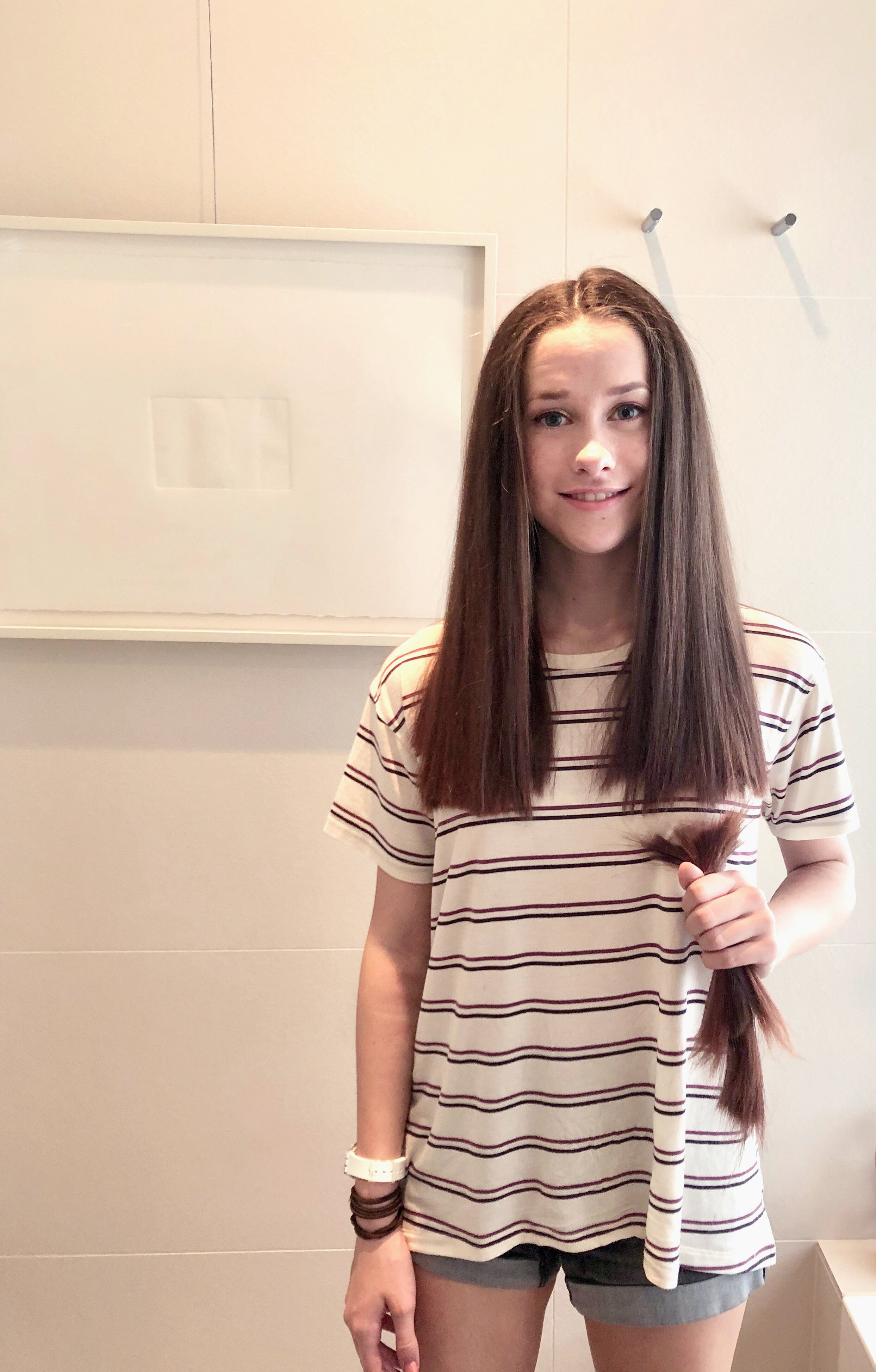
Two months sheltered-in-place. It’s spring, everything is in bloom. Everyone needs a haircut.

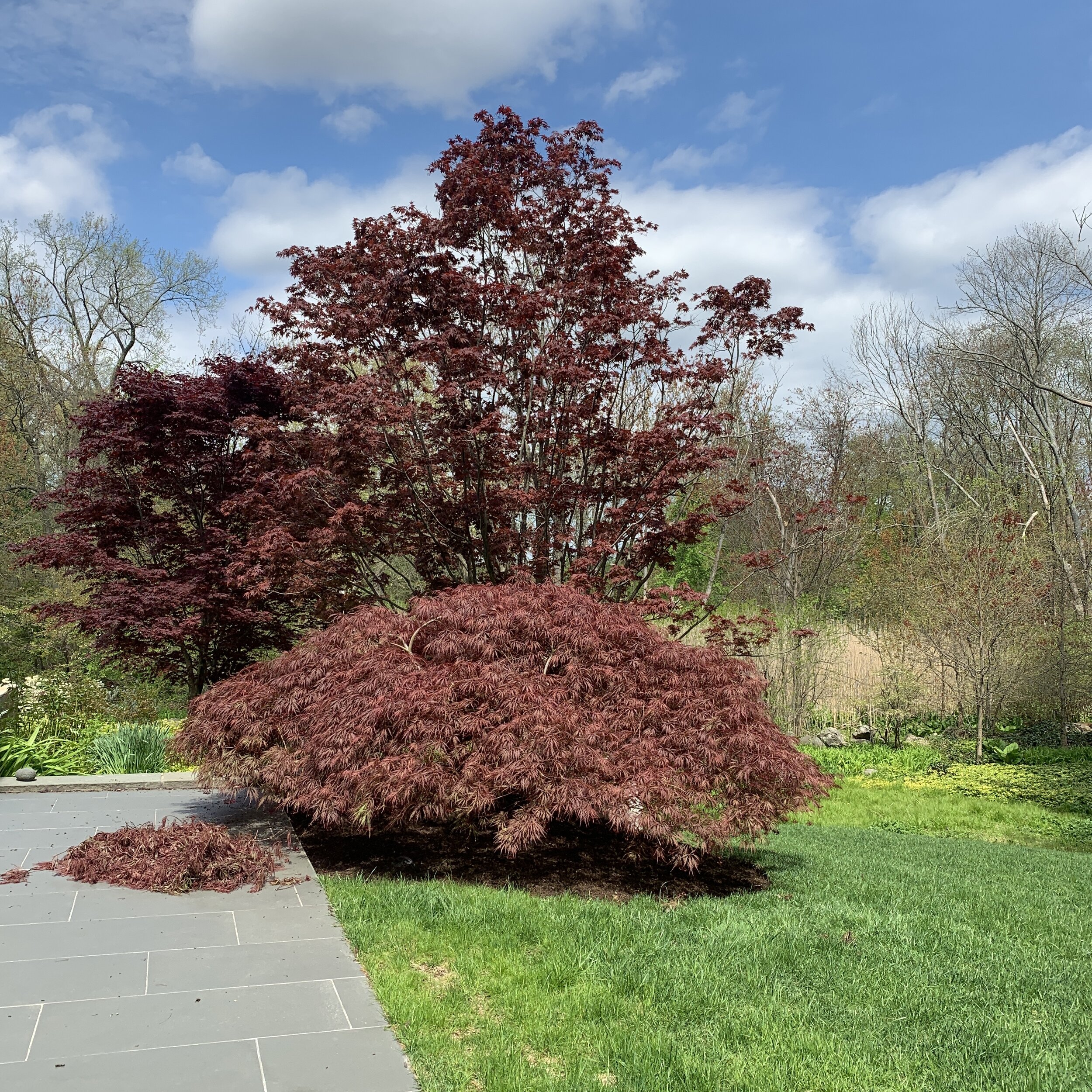
In early April, the Japanese maple tree played nest to Isabella as she inserted herself into its still bare branches, captured in an image which would become the start of a new collaborative project with my Italian counterpart, Federica Pamio. We fused our images of solitude and isolation during the pandemic to create a body of work titled n’est nest. Read about our project in the Boston Globe by Cate McQuaid!

JB1A0148.jpg
untitled (n’est nest, test 2), 2020, Lin.Fe

untitled (n’est nest, test 2), 2020, Lin.Fe

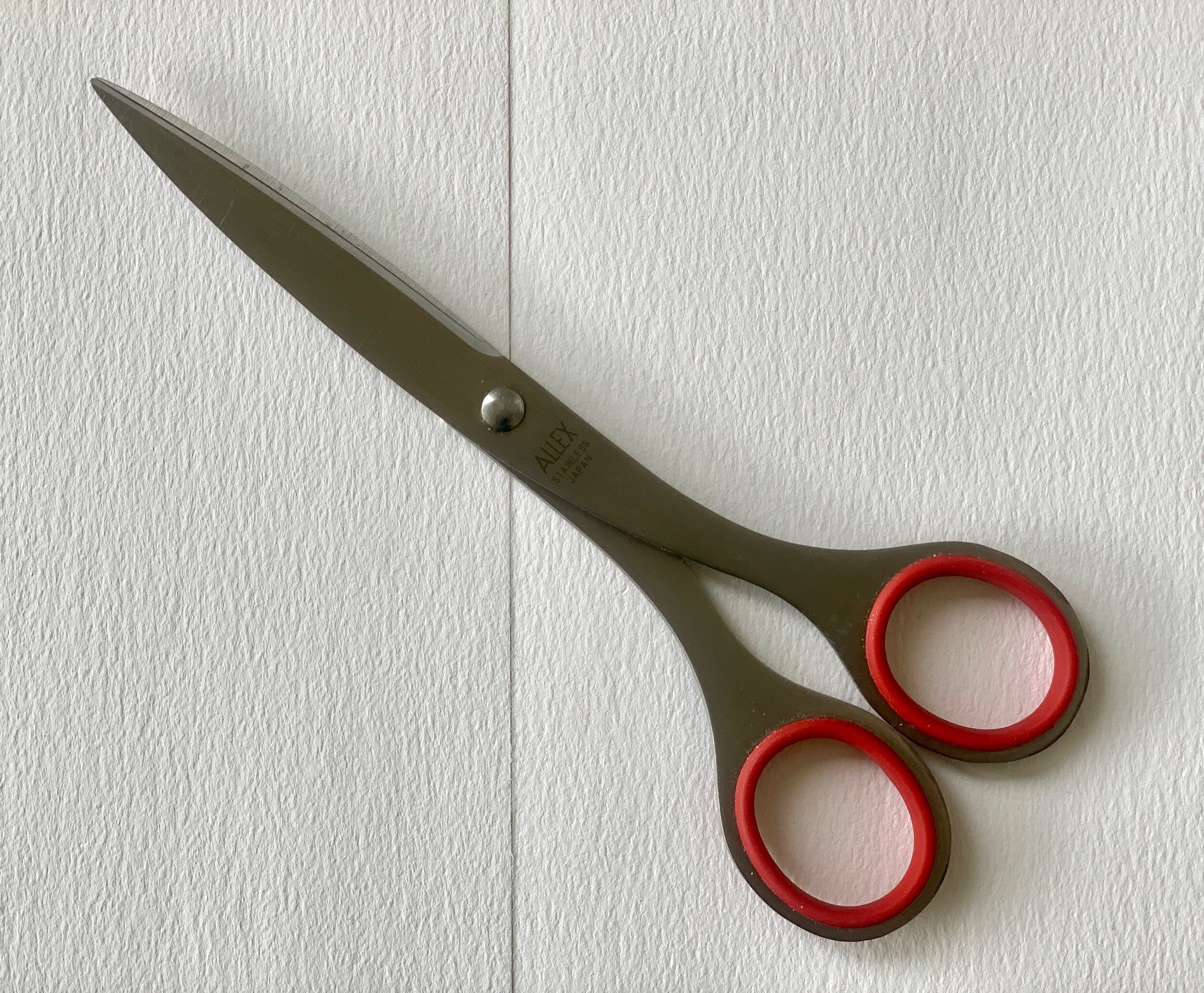
Today I pruned that tree. Yesterday I cut Isabella’s hair. I think about the artist’s toolbox……mine includes my fierce pair of scissors, Allex, stainless steel, made in Japan. I use them for paper, fabric, and that haircut.

IMG_8055.jpeg

On scissors… last year, Natalie interviewed me for one of her Parson’s classes. She wanted to know about my favorite tool as an artist, my scissors. We traced back a connection to my mom, who had worked as a seamstress her entire life. Natalie wove my story into a handmade pair of paper and metal scissors. Meg always reminds me that the most personal is the most creative.

IMG_8105.jpeg

Very pleased with the prune job and Isabella’s haircut - sort of poetic, their relationship to one another. We are celebrating with her homemade bubble tea. The new DIY everything is not so bad…

MY TOOLS

The scissors that have seen me through haircuts, handmade facemask making, paper cutting and so much more.

The scissors that have seen me through haircuts, handmade facemask making, paper cutting and so much more.

My garden tool bag, provides me immense joy. It serves as my portable art studio that I use to shape nature, even the scary work of pruning a 35 year old Japanese maple in the middle of Spring (evidently best done earlier, when it’s dormant, like in…

My garden tool bag, provides me immense joy. It serves as my portable art studio that I use to shape nature, even the scary work of pruning a 35 year old Japanese maple in the middle of Spring (evidently best done earlier, when it’s dormant, like in the photo of Isabella wrapped up inside its EMPTY branches!).