written for “A Drop in the Ocean”, Substack by Cate MQuaid; January 20, 2026: “Silence in Form”
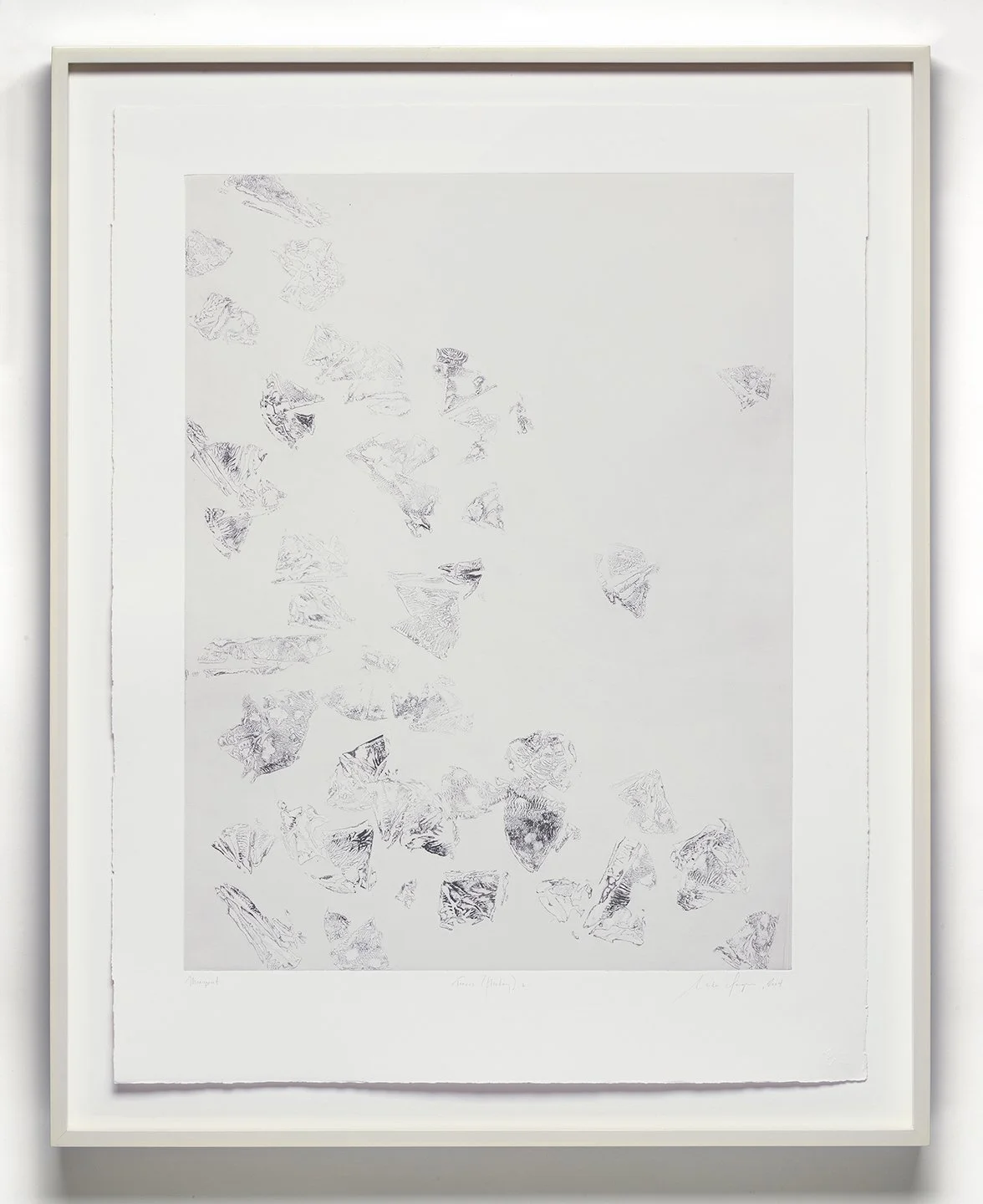
© Linda Pagani, Traces (fleeting), n.2, 2024, monoprint, ash, ink, graphite on paper photo credit Will Howcroft
For the past decade, I have kept personal journals filled with intimate thoughts. They are written in careful cursive, a discipline ingrained early on by parochial school. Page after page, every day—just as author Julia Cameron insists in The Artist’s Way. These journals are not meant to be read by anyone else. They are my private container, a place to give voice to emotions I cannot easily express out loud, especially the negative ones: anger, resentment, grief, sorrow.
Recently, I began to feel my own mortality. A thought weighed on me: if I were to die tomorrow, my journals would remain. My most unfiltered thoughts would lie bare for the world to interpret. I worried they might be mistaken for hatred or bitterness, when in truth they were a purging—a somatic exercise, a way to move toxic feelings out of my body and onto paper.
I did not want to erase those years, but I also did not want them preserved in that form. So I burned them. All of them.
The act was both unsettling and liberating. What was once permanent became ephemeral. Memory turned to dust—surrendered, but not quite forgotten.
From those ashes, new work was born — Traces (fleeting), a series of monoprints created from the debris of my own burnt journals.
Ash as Evidence
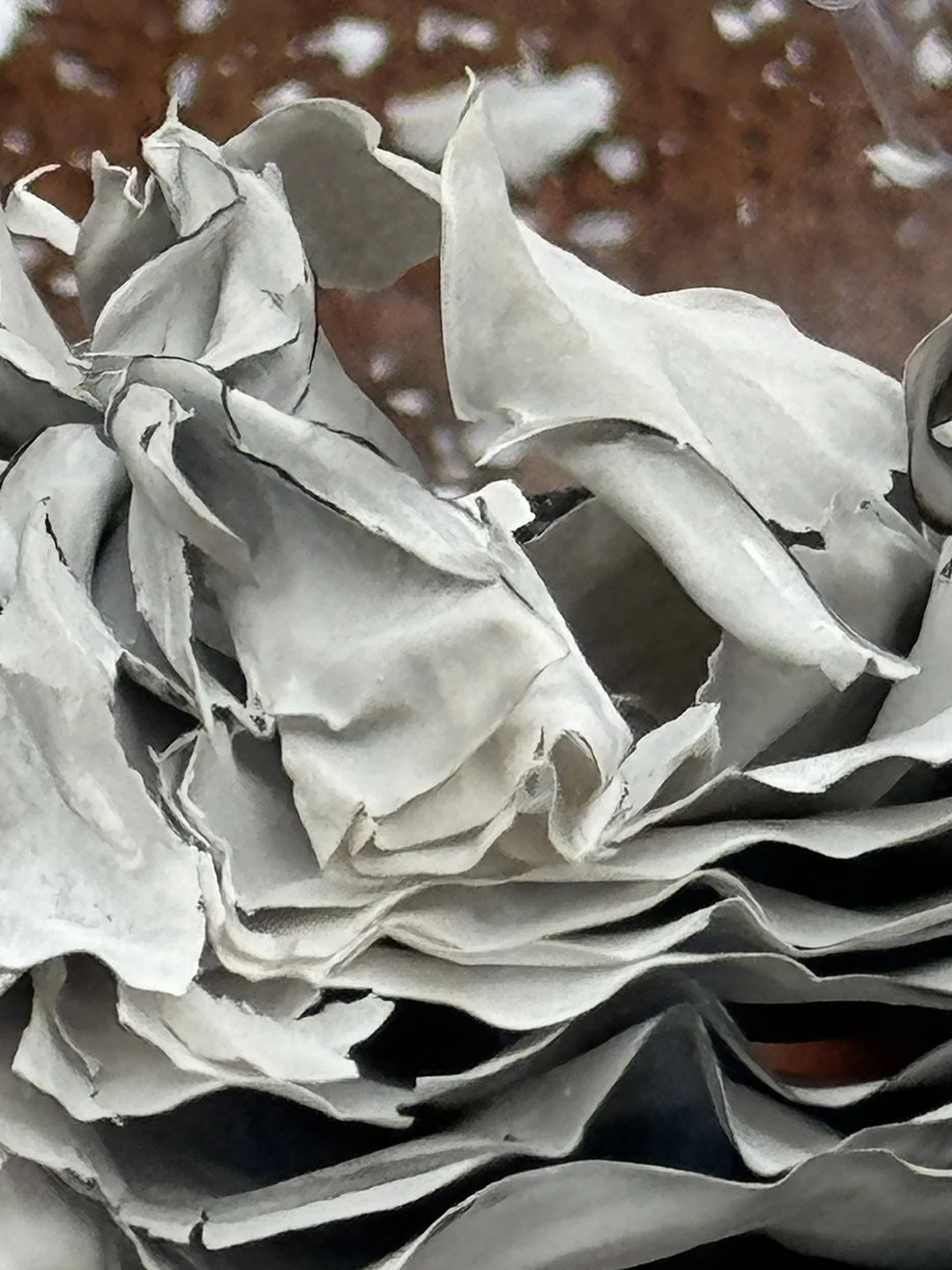
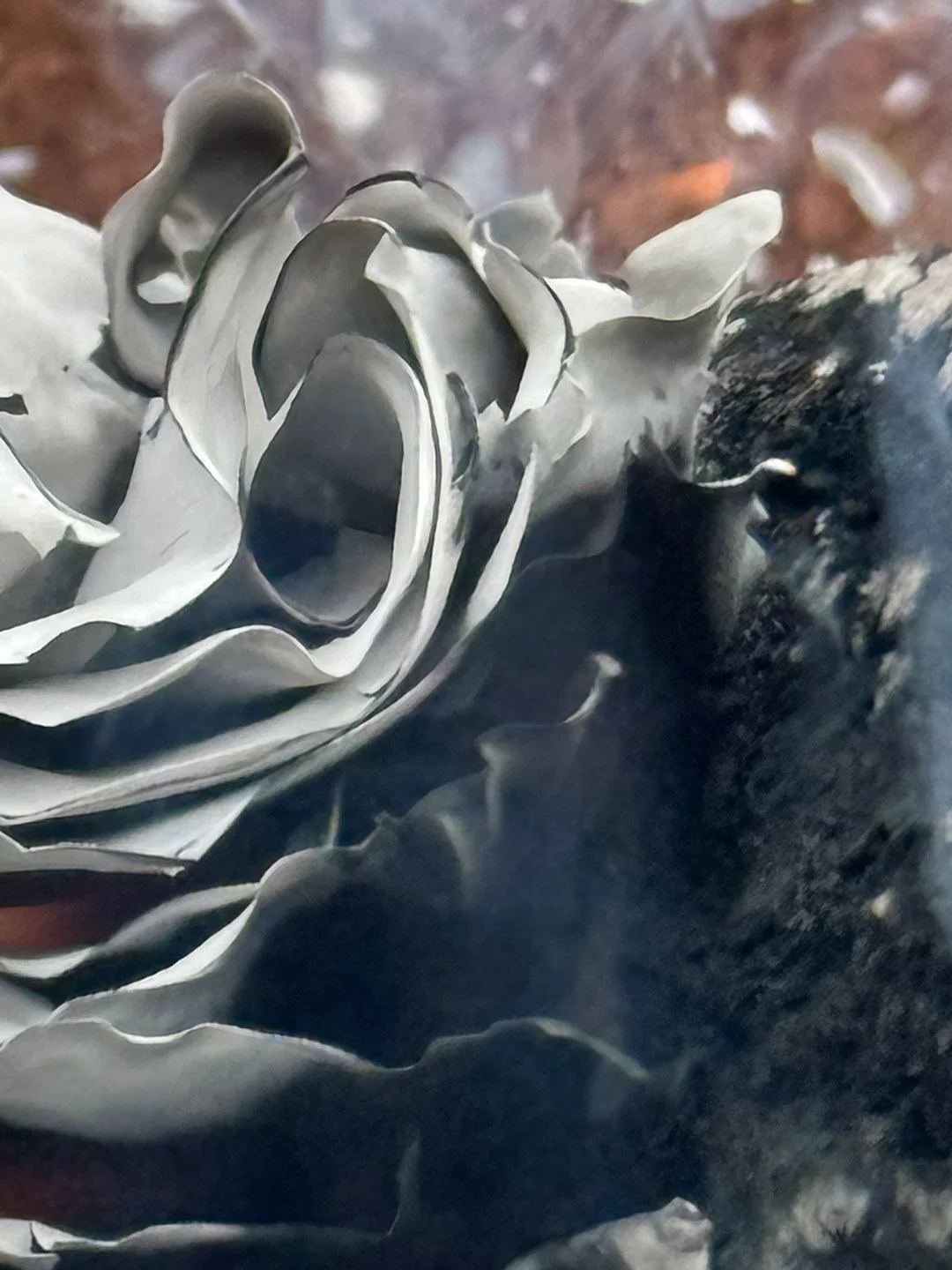
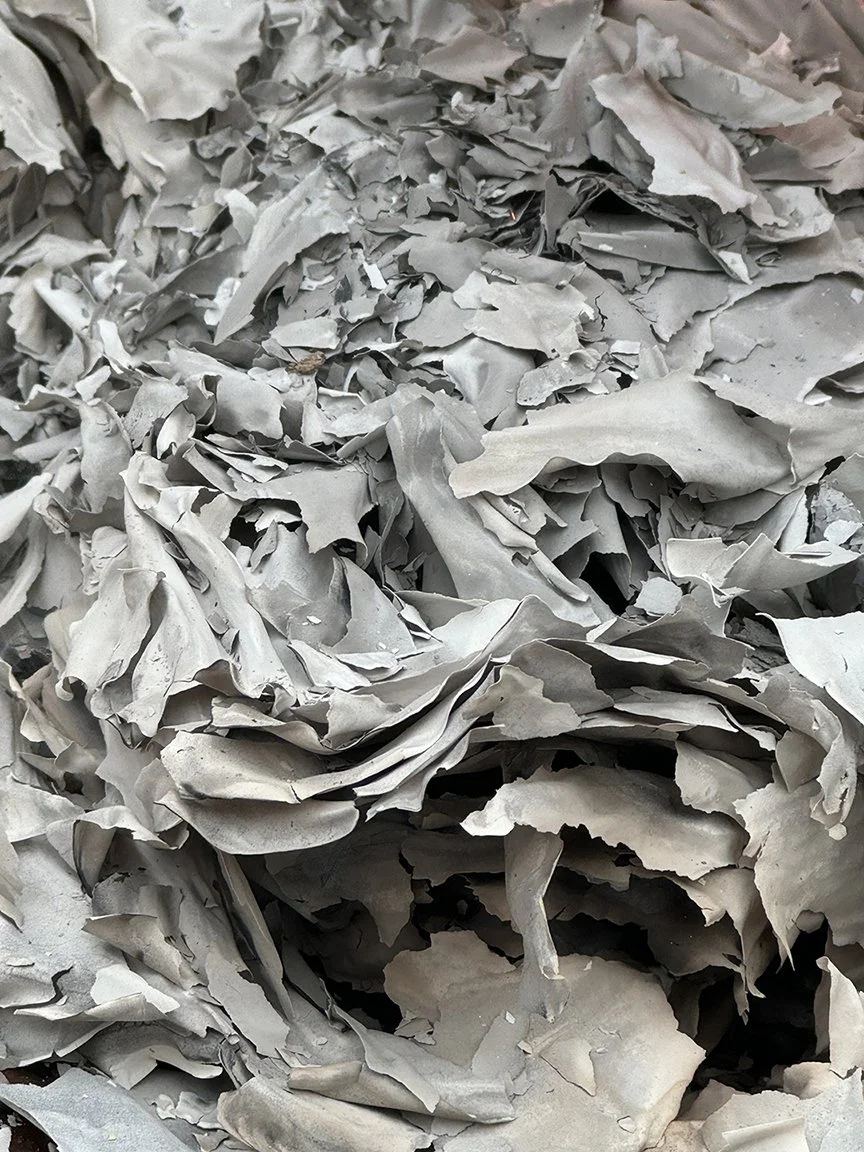
burning my journals
The ashes became material evidence of emotions once inscribed in ink. They held white-hot rage accumulated from years of keeping silent when I should have been vocal. They also carried a generational legacy—the learned containment of negative emotion, the habit of endurance over expression.
Yet this work is not about despair. It is deeply hopeful.
There is a fluttering upward in the composition of the prints, a quiet lift toward the skies. The ash-embedded forms seem to float—lightened, released—representing peace, calm, and love.
Fleeting, yet deeply felt, the ashes linger as a testimony to what once was.
Finding a New Language
My practice has long been rooted in an awareness of space as an emotional agent, with early work focused on architecture and landscape through the lens of a camera. Over time, I began reimagining architectural structures in new media, starting with paper. Origami-like shapes emerged, guided by the visual language of walls, edges, and corners. I made hundreds, then thousands. Assembled together, these interpretations of space gradually shifted from geometric to organic, and continue to resonate throughout my work in sculpture, print, and installation.
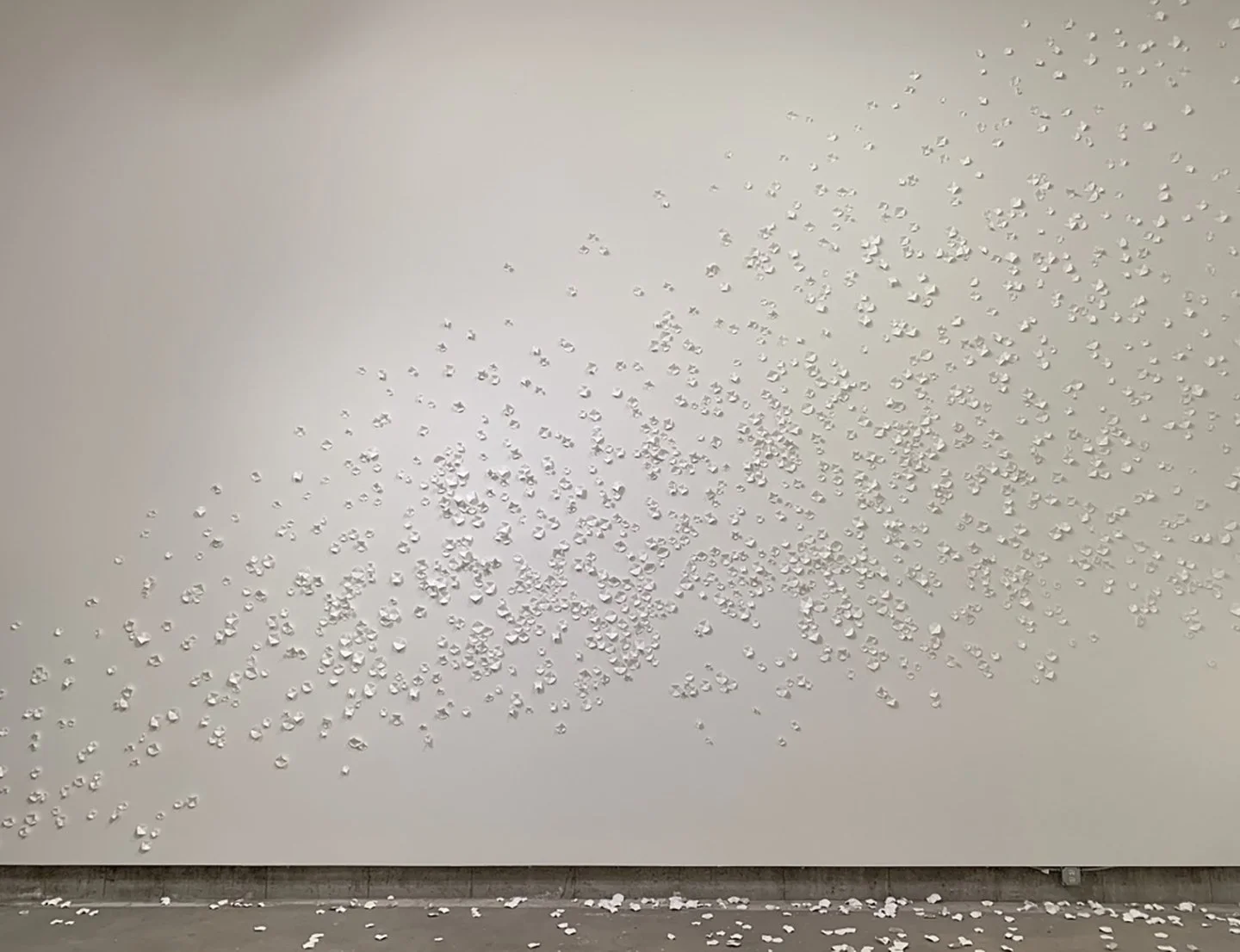
© Linda Pagani, Garden of Eve, 2020, paper, site specific installation
The explorations in paper naturally led to Traces (fleeting). I began to ask: could decomposition itself leave a trace of feeling, preserving the intensity of anger, grief, and release in material form? In the prints, the ashes assume a presence—transforming what was once private and contained into something visible, tender, and enduring.
With the guidance of master printer Bryan Smith, founder of Stone Hill Press, I began working more seriously with printmaking. I was hesitant at first. I have never identified as a drawer, and printmaking always seemed reserved for artists with finely honed draftsmanship.
Process as Transformation
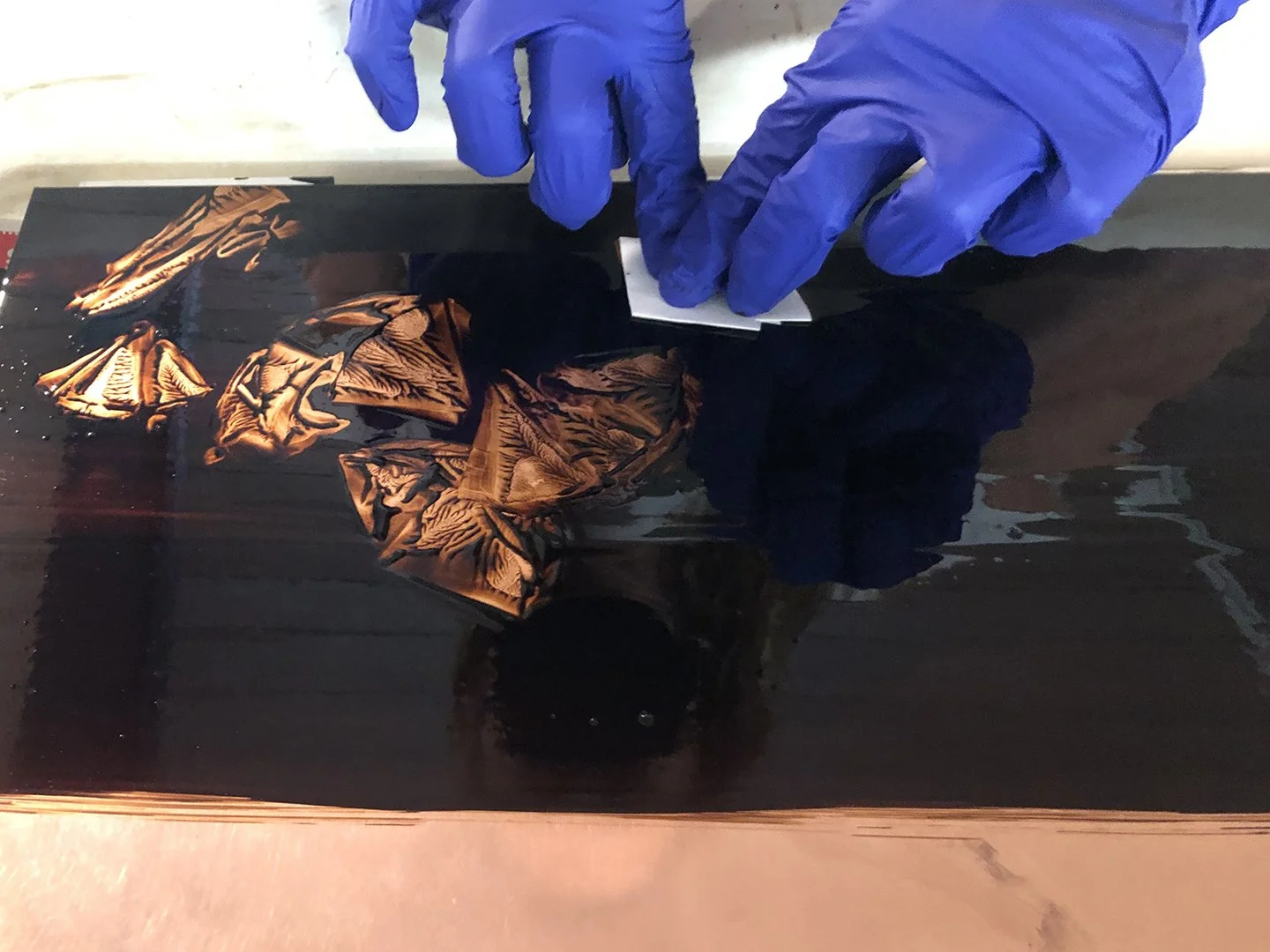
Bryan nudged me into unfamiliar territory, encouraging me to loosen my grip on control and to ‘draw’ through my own mark making. We etched the shapes into the copper plate by ‘swooshing’ my folded paper forms onto wet ground. After the ground dried, the plate was bathed in acid and we were ready. The first ink test print felt wrong. Heavy. It didn’t reflect the experience of watching the journals burn, of seeing the anger lift and float away.
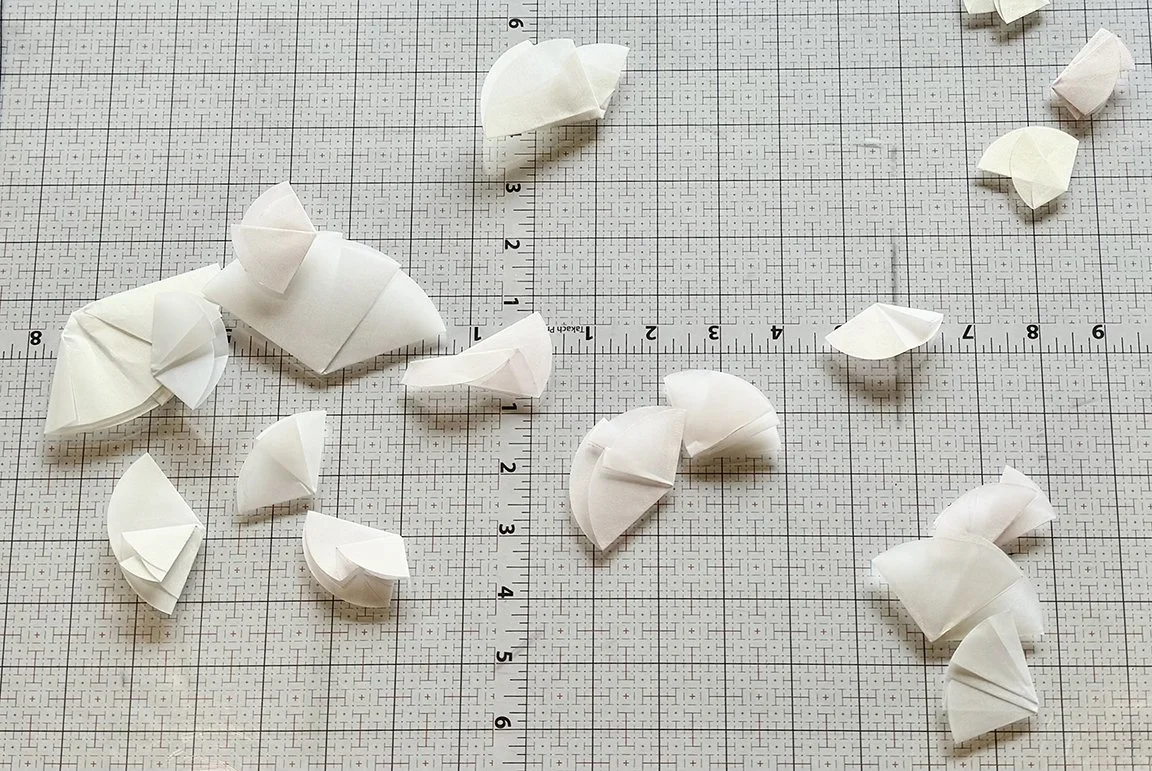
folded paper shapes
creating the forms on wet ground
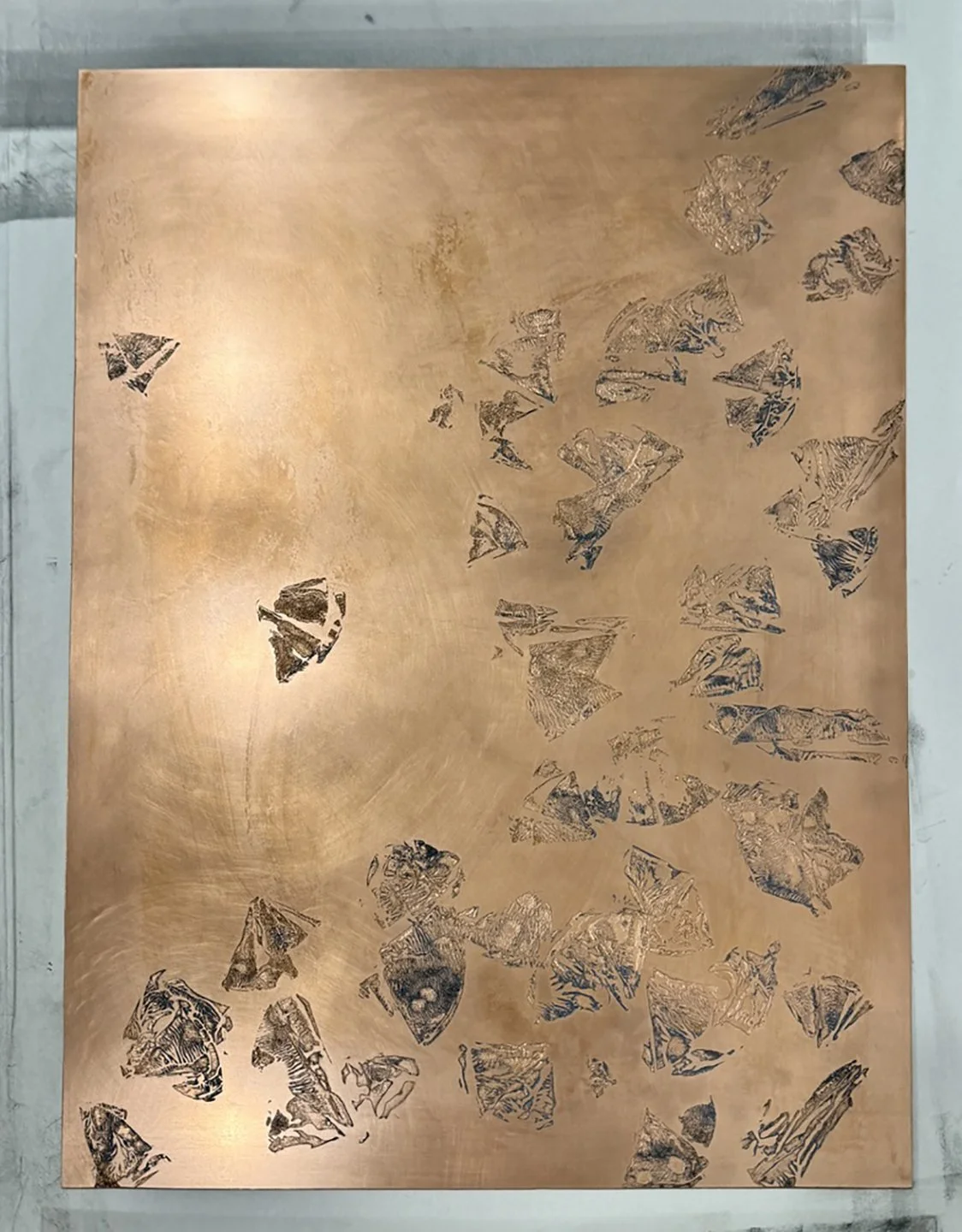
final etched copper plate
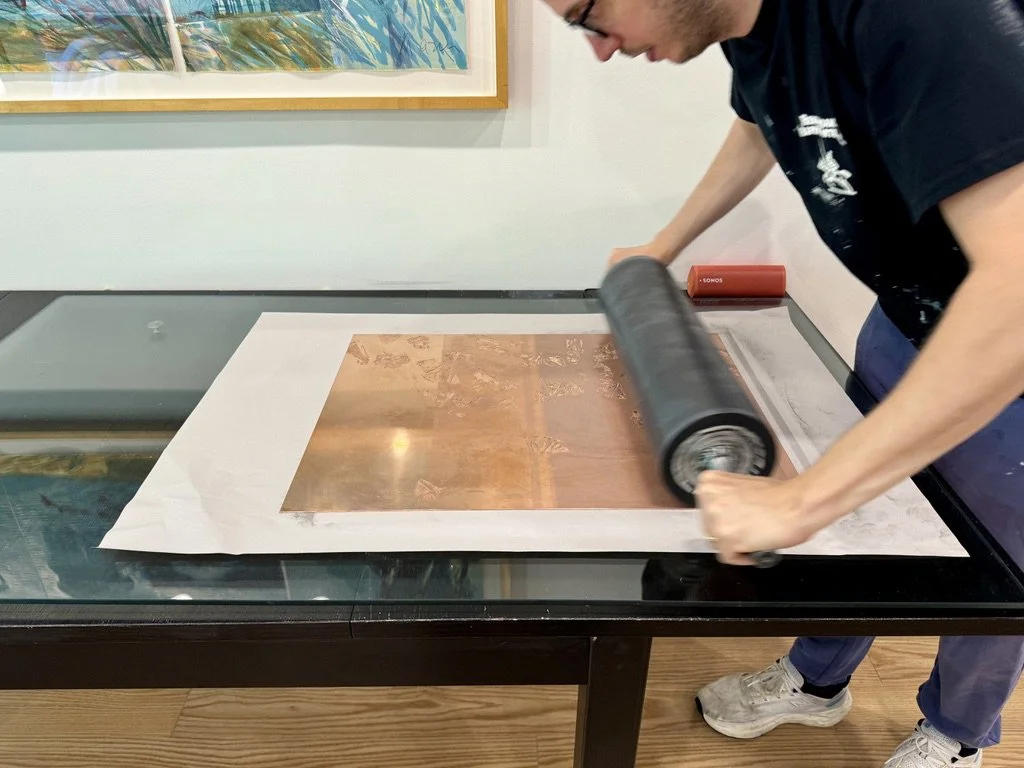
Bryan Smith rolling ink onto the etched copper plate
Then we tried no ink—just embossment.
Yes—and no.
The embossments were seductive, but the image only revealed itself when viewed at certain angles, echoing a frustration I had carried for years from earlier work. So we kept experimenting. Ink. Ash. Mica. Graphite. Chine Collé.
And suddenly, it resolved. Printmaking unfolded as a process of becoming: numerous iterations, trial and error, one more, one more, until…
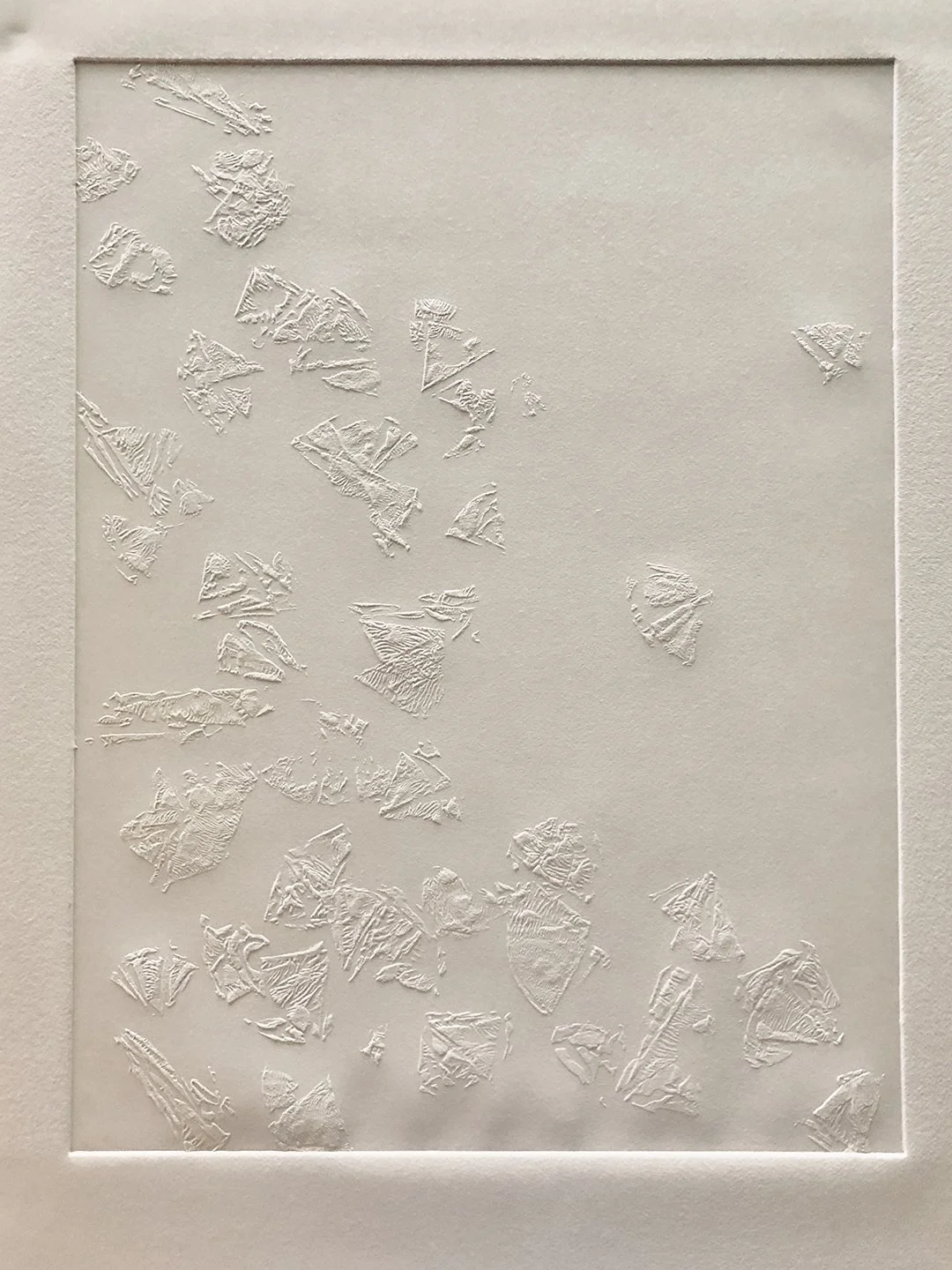
© Linda Pagani, Traces (fleeting), n.1, 2024, monoprint, embossment on paper
The forms—coaxed into visibility by a delicate balance of color and pressure-—floated upward across the paper. I could finally see it—the transformation of negative emotion into lightness of being.
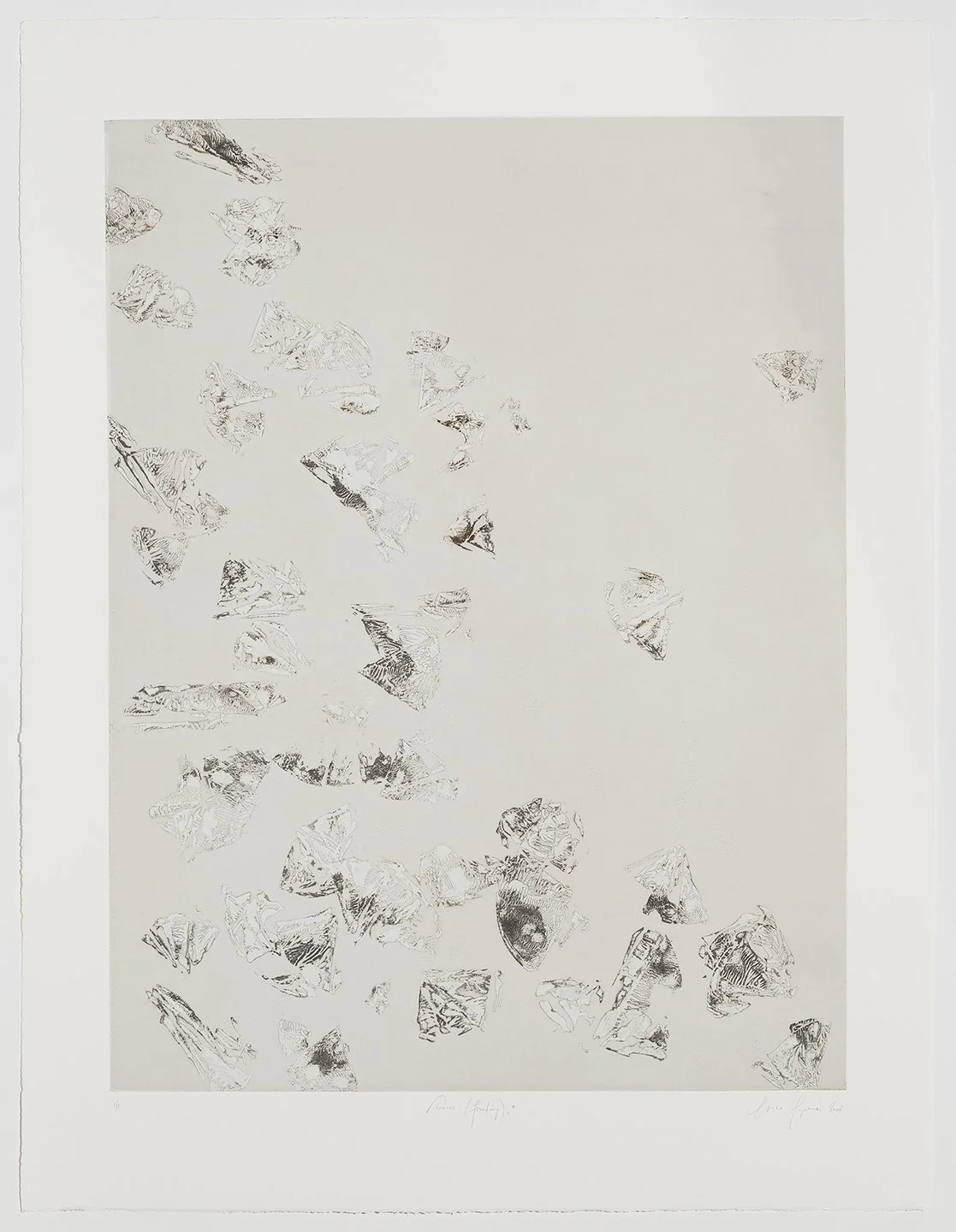
© Linda Pagani, Traces (fleeting), n.3, 2024, monoprint, ash, ink, graphite on paper photo credit Will Howcroft
Having a Voice
At its core, this work is about having a voice in my own life.
The journals did their job. They carried me through unbearable moments. Burning them was not an erasure, but a transition—from containment to release, from memory to material, from silence to form.
What remains are traces.
Fleeting, tender, and true.
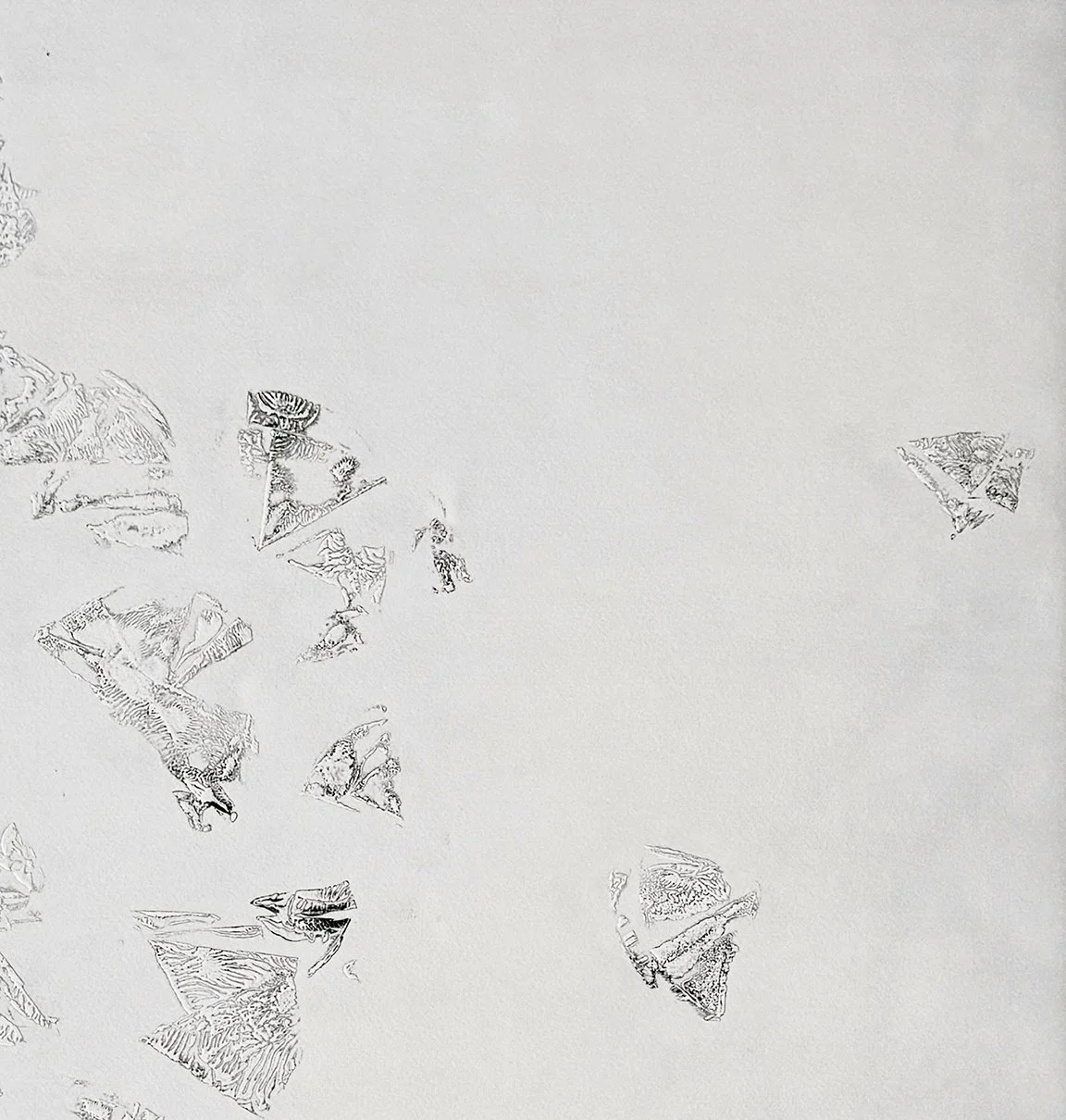
close up © Linda Pagani, Traces (fleeting), n.2, 2024